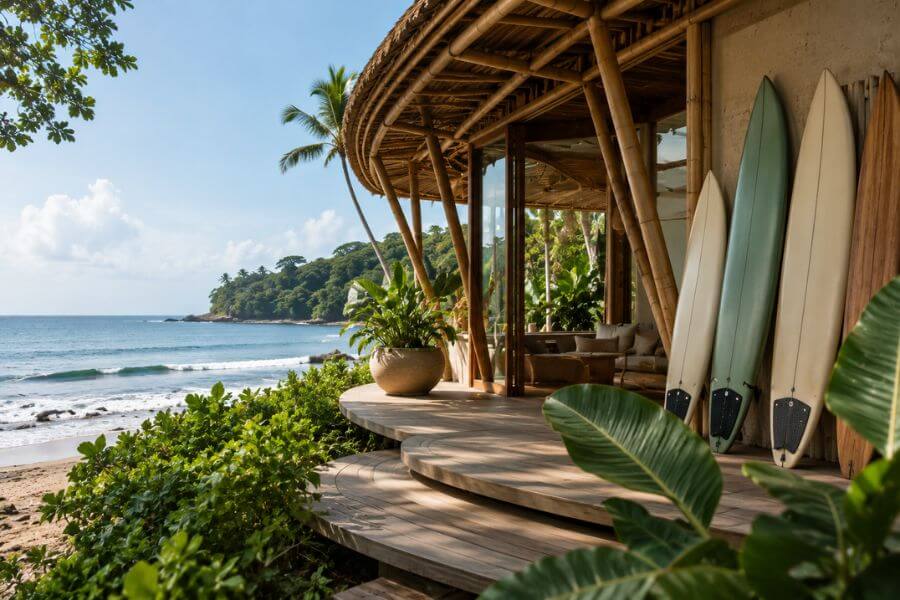
Imagine standing on a pristine beach at sunrise, your board tucked under your arm, looking out at a perfect wave peeling across a crystal-clear reef. The air is fresh, the sand is clean, and the resort behind you blends so perfectly into the lush coastal jungle that it looks like part of the natural landscape. This is the new reality of coastal travel, where high-end comfort no longer comes at the expense of the planet. For a long time, traditional high-end resorts had a reputation for heavy water use, massive energy consumption, and high waste, but a powerful shift is happening. Ocean lovers are demanding more from their travel experiences, which has sparked the rise of eco-centric surfing and beach resorts. This movement blends premium hospitality with deep environmental care, proving that you can enjoy world-class waves and top-tier amenities while actively protecting the marine environments you love.
Key Takeaways
- Green Building Practices: Modern high-end surf resorts use local, natural, and recycled materials to build beautiful structures that match the local scenery without harming coastal habitats.
- Renewable Energy and Smart Technology: Leading destinations rely heavily on solar power, wind turbines, and energy-saving systems to reduce their carbon footprint while keeping guests fully comfortable.
- Complete Plastic Elimination: Resorts are getting rid of single-use plastics entirely, swapping them out for refillable containers, bamboo tools, and filtered water systems.
- Water Conservation Mastery: Through greywater recycling, low-flow plumbing, and rainwater collection, these spots protect local water sources, which is vital in fragile coastal areas.
- Active Ocean Regeneration: True eco-luxury means giving back, with resorts partnering with scientists to plant coral reefs, protect marine animals, and support local beach communities.
The Evolution of the Conscious Ocean Traveler
The travel world is experiencing a massive change driven by the choices of a new generation of ocean enthusiasts. For decades, standard surf trips meant roughing it in simple beach shacks with basic amenities, while traditional luxury vacations often meant staying in giant concrete hotels that altered natural coastlines and generated tons of waste. Today, you do not have to choose between a rugged adventure and a lavish getaway. You can have both, and you can enjoy them with a clear conscience.
This shift comes from a deeper understanding of how fragile our coastlines really are. When you spend hours in the water waiting for the next set of waves, you notice the floating plastic, the bleaching coral reefs, and the erosion of the sand. Surfers and beach lovers are naturally connected to the health of the sea. As a result, when you plan a vacation today, you are likely looking for destinations that match your personal values. You want a plush bed, excellent dining, and top-tier service, but you also want to know that your presence supports the local community and protects the local ecosystem.
Resort owners are listening to this demand. They are moving away from old, wasteful hospitality models to embrace regenerative travel. This means the goal is no longer just to minimize damage, but to actually leave a place better than it was found. It is a win-for-all situation where your stay funds vital conservation work and helps local neighborhoods thrive.
Architecture That Breathes with the Coast
Building a high-end property on a sensitive beachfront requires a completely new approach to design and construction. Traditional developers often cleared massive plots of land, tore down local trees, and poured tons of concrete, which disrupted local wildlife and caused major soil erosion. The new wave of eco-luxury resorts uses a philosophy called conscious architecture, where buildings are designed to adapt to the land rather than forcing the land to adapt to them.
Developers now use low-impact building methods. Villas are often elevated on stilts to let natural water runoff flow freely beneath them and to allow small coastal animals to move without barriers. Instead of imported materials that take a massive amount of fuel to ship across the world, builders choose local resources like certified sustainable timber, bamboo, natural stone, and thatch made from dried palm leaves. These materials look stunning, give the resort an authentic feel, and have a much lower environmental impact.
Furthermore, these structures are smart. Architects design them with high ceilings, wide open spaces, and strategic vents to make the most of natural sea breezes. This passive cooling technique cuts down on the need for heavy air conditioning, allowing you to stay cool while listening to the natural sounds of the ocean just outside your window.
Traditional Construction vs. Conscious Coastal Architecture
| Construction Aspect | Traditional Resort Building | Conscious Coastal Architecture |
| Material Sourcing | Imported concrete, steel, and synthetic finishes with high shipping footprints. | Local bamboo, sustainable timber, thatch, and natural stone. |
| Land Disruption | Heavy land clearing, grading, and removal of natural plants. | Elevated structures on stilts that preserve the original terrain and flora. |
| Cooling and Ventilation | Heavy reliance on sealed rooms and continuous air conditioning. | Open-air layouts that use natural sea breezes for passive cooling. |
| Visual Integration | Large, boxy structures that stand out and block local views. | Low-profile designs that blend seamlessly into the surrounding jungle or dunes. |
Powering the Paradise with Renewable Energy
Running a high-end resort takes a massive amount of energy. Guests expect hot showers, bright lighting, perfectly chilled drinks, and reliable internet access at all times. In the past, remote surf destinations relied on loud, dirty diesel generators that polluted the air and carried a high risk of fuel spills near the water. Eco-centric resorts are changing the game by proving that you can run a five-star operation entirely on clean energy.
Solar energy leads this revolution. Many resorts install large solar arrays on their roofs or over parking areas to capture the intense tropical sun. These systems are paired with advanced battery storage setups, ensuring that the lights stay on and the refrigerators stay cold even through the night or during cloudy spells. In areas with steady coastal winds, small, quiet wind turbines add an extra layer of clean power.
Smart automation also plays a huge role behind the scenes. When you step out of your villa to catch a morning surf session, smart sensors can detect that the room is empty. The system automatically adjusts the climate control and turns off unnecessary lights to save power. This smart use of technology keeps the resort running smoothly without requiring you to constantly worry about your energy use.
Total Plastic Elimination and Waste Revolution
Plastic pollution is one of the biggest threats facing our oceans today, and beach resorts have historically been major contributors to this problem through tiny shampoo bottles, plastic cups, and packaged snacks. Eco-luxury surf resorts are tackling this issue head-on by creating complete plastic-free environments.
When you arrive at a modern sustainable resort, you will likely be handed a stylish, reusable metal or glass water bottle that you can top off at purification stations scattered across the property. In the bathrooms, single-use plastic bottles are replaced with elegant ceramic or stone dispensers filled with organic, locally made soaps, shampoos, and lotions. Even the items in the gift shop and the uniforms worn by the staff are carefully chosen, often made from recycled ocean plastics or organic cotton.
Managing waste goes far beyond just banning plastic straws. These resorts run advanced composting and recycling programs. Food scraps from the kitchen do not go to a landfill; instead, they are turned into rich soil for the resort’s organic gardens. This closes the loop entirely, transforming kitchen waste into nutrients that grow fresh vegetables for your next dinner.
The Lifecycle of Waste in an Eco-Luxury Resort
- Sourcing: The kitchen buys ingredients from local fishermen and farmers, avoiding plastic packaging entirely.
- Prep and Consumption: Chefs create fresh meals, and guests enjoy them with reusable plates, glasses, and utensils.
- Sorting: Staff sort any leftover materials immediately into organic waste, clean recyclables, and compostable items.
- Composting: Organic kitchen scraps go to an on-site compost center where they break down naturally over a few weeks.
- Regeneration: The fresh compost feeds the resort’s vegetable patches and fruit trees, creating a continuous food cycle.
Protecting Every Drop through Water Stewardship
Water is a precious resource, especially on small islands and remote coastlines where clean drinking water is scarce. A traditional luxury hotel can consume a staggering amount of water per guest every day to maintain green lawns, fill massive swimming pools, and run endless laundry cycles. Eco-centric resorts use advanced water stewardship to ensure they never drain the local community’s water supply.
The first line of defense is capturing rainwater. Large roof surfaces collect water during tropical downpours and channel it into massive underground storage tanks. This water is filtered and used across the resort. For everyday use, low-flow showerheads, faucets, and high-efficiency toilets cut down water usage dramatically without sacrificing the strong water pressure you expect during a post-surf rinse.
The real magic happens with greywater recycling. Water from sinks, showers, and washing machines is collected and treated through natural filtration systems, which often use local wetland plants to clean the water naturally. This recycled water is then used to irrigate the resort’s landscaping and gardens, ensuring that not a single drop goes to waste.
Culinary Excellence from Ocean and Earth
The food at an eco-luxury surf resort is a highlight of the experience, moving away from imported, processed goods toward hyper-local, fresh ingredients. This farm-to-table and ocean-to-plate approach reduces the huge carbon footprint of flying food in from other countries and ensures you enjoy the freshest meals possible.
Resorts often maintain their own organic farms and fruit orchards right on the property. The herbs, greens, and fruits on your plate are often picked just hours before your meal. When it comes to seafood, resorts partner directly with artisanal fishermen from the local village. These fishermen use traditional, low-impact methods like handlining or spear fishing, which protect the fish populations and prevent the damage caused by large commercial nets.
This setup supports the local economy directly, providing steady income to nearby families. It also means the menu changes constantly based on what is fresh and in season, giving you an authentic taste of the region’s culinary culture.
Comparing Food Sourcing Models
- Traditional Luxury Resort: Uses large corporate suppliers, relies on flown-in frozen seafood, serves imported fruits out of season, and generates significant packaging waste.
- Eco-Centric Surf Resort: Partners directly with local spear fishermen, harvests daily from an on-site organic garden, structures menus around local seasons, and uses zero-packaging fresh delivery.
Active Marine and Coastal Regeneration
True eco-luxury goes beyond just minimizing harm; it focuses on active regeneration. When you book a stay at a top-tier sustainable surf resort, a portion of your stay often directly funds local environmental conservation projects. Many resorts have full-time marine biologists on staff who guide these efforts and educate guests.
Coral reef restoration is a major focus for properties located near surf breaks. Coral reefs act as natural barriers that create the perfect waves surfers love, while also providing a home for a quarter of all marine life. Resorts set up coral nurseries right in front of their properties, growing fragments of resilient coral on special frames before transplanting them back onto damaged reefs. Guests can often join the marine team in the water, learning how to plant coral and witnessing the return of colorful fish to the area.
Resorts also lead coastal protection projects like planting mangroves and restoring sand dunes. Mangroves are incredible plants that protect the coast from erosion, clean the water, and trap massive amounts of carbon from the air. By restoring these habitats, resorts ensure that the coastline stays healthy and beautiful for decades to come.
Holistic Wellness and the Surf Experience
The connection between surfing, nature, and personal wellness runs incredibly deep. Eco-centric resorts design their entire guest experience around this harmony, offering holistic wellness programs that go far beyond a standard massage. The goal is to help you disconnect from the frantic pace of modern life and reconnect with your inner self and the natural world.
Yoga and mindfulness are woven directly into the daily routine. Many resorts feature beautiful, open-air yoga platforms built from sustainable bamboo, positioned on cliff edges or right on the sand so you can practice your moves while watching the waves roll in. Daily sessions are often tailored specifically for surfers, focusing on flexibility, balance, and core strength to prepare your body for the water or help it recover after a long day of paddling.
The wellness spas at these properties mirror this eco-friendly focus. Treatments use natural, organic ingredients sourced from the surrounding jungle or ocean, such as mineral-rich sea salts, wild seaweed, cold-pressed coconut oil, and local medicinal herbs. There are no harsh chemicals or synthetic fragrances used, ensuring that everything that touches your skin is pure, healthy, and completely biodegradable.
Empowering and Collaborating with Local Communities
A resort cannot be truly sustainable unless it cares for the people who live in the area. In the past, large international hotel chains would often move into a beautiful coastal spot, bring in their own outside management, and leave very little economic benefit for the local community. Eco-luxury surf resorts operate on a model of deep community collaboration and mutual respect.
The vast majority of the resort’s staff, from hospitality managers and surf guides to chefs and drivers, come from the immediate area. Resorts invest heavily in training and education programs, providing high-paying careers and leadership opportunities for local residents. This creates a warm, authentic atmosphere where guests interact with staff who are genuinely proud to share their home culture and local knowledge.
Furthermore, these resorts often fund vital local infrastructure. Your stay might help support a nearby school, fund a clean drinking water system for a local village, or sponsor waste-management programs in the surrounding area. This builds a strong bond between the resort and the community, ensuring that tourism acts as a positive force that elevates everyone involved.
Frequently Asked Questions
Can an eco-friendly resort really provide a true luxury experience?
Yes. True modern luxury is about space, privacy, authenticity, and an unmatched connection to nature. Eco-centric resorts offer beautifully designed private villas, world-class personal service, and exceptional dining made from the freshest local ingredients. By removing unnecessary extras like single-use plastics and artificial finishes, they offer an authentic, high-end experience that feels exclusive and deeply connected to the environment.
How do sustainable surf resorts protect the local waves and coral reefs?
Resorts protect waves and reefs by stopping the flow of waste and pollution into the ocean and by actively rebuilding damaged marine areas. They use advanced wastewater systems to prevent dirty water from reaching the sea, eliminate plastics to keep beaches clean, and fund coral nurseries to restore damaged reefs. Since healthy coral reefs are what cause waves to break perfectly, protecting the reef directly preserves the quality of the surf break.
What kind of materials are used to build these eco-luxury resorts?
These properties are built using sustainable, local, and low-impact materials. Common choices include fast-growing bamboo, certified sustainable local hardwoods, natural stone, and traditional thatch made from palm leaves. Builders avoid using heavy concrete and toxic paints, opting instead for natural oils, clay finishes, and recycled materials that look beautiful and blend perfectly into the natural coastal scenery.
How do these resorts manage power and water without hurting the environment?
They use renewable energy sources and advanced recycling loops. Power is generated using solar panels and wind turbines, backed up by large modern battery storage systems. Clean water is collected from rain and used efficiently via low-flow fixtures. All the water from sinks and showers is then treated through natural plant filtration systems and reused to water the resort’s gardens, creating a zero-waste water cycle.
How does staying at an eco-centric resort help the local beach community?
Staying at a sustainable resort keeps your travel spending directly inside the local economy. These resorts hire locally, offer excellent wages, and source their food and supplies from nearby farmers and fishermen. They also frequently invest a portion of their profits into local schools, healthcare clinics, and community clean-water projects, ensuring that tourism brings real, lasting benefits to the entire neighborhood.