Key Takeaway
Contactless hotel technology shifts routine chores to smart devices so hotel workers can leave the front counter. This changes hotel stays by ending long lines and letting staff focus on warm, helpful, and real human interactions that make you feel truly welcome.
For a long time, people worried that adding screens and automation would make hotels feel cold, lonely, and robotic. It sounds backwards at first. How can less face-to-face contact make a place feel warmer and more friendly? The truth is that old-fashioned hotel setups spend too much time on paperwork instead of people. When technology takes care of the boring, repetitive chores, hotel workers are finally free to do what they do best: care for you.
The Problem with Old-Fashioned Hotel Front Desks
To understand why new digital tools are making things better, we have to look at the old way of doing things. For decades, the hotel lobby front desk stood as a giant wooden wall between the worker and the guest. This layout was built around business tasks rather than human comfort.
When you arrived at a traditional resort, the first few minutes were filled with chore-like steps. The worker had to ask for your name, look up your booking, double-check your ID, swipe your credit card, print out a long piece of paper, ask for your signature, and finally hunt for a plastic key card that often stopped working if you put it next to your phone.
During this entire process, where was the worker looking? They were looking down at a screen or a printer, not at you. They were so busy trying not to make a mistake on the computer that they could not give you their full attention. They might ask how your trip was, but it often felt robotic because they were multitasking. The conversation was trapped inside a strict script.
When a hotel gets busy, this old setup breaks down quickly. Lines grow long, guests get grumpy, and the staff gets stressed out. A tired family waiting to check in does not want to watch a worker struggle with a slow printer. The worker feels the pressure and tries to move as fast as possible, which means they stop smiling and start rushing people through. In this environment, real human hospitality dies. The interaction becomes a cold transaction about money and room numbers, leaving no space for a genuine connection.
Breaking Down the Digital Wall
Contactless technology knocks down that wooden front desk barrier completely. By moving the boring administrative tasks to your own phone or a simple electronic kiosk, the hotel changes the whole point of arrival. You handle the data entry before you even pack your bags, which means you get to choose exactly how your stay begins.
Think about how much info you can share through a web link on your device days before your trip. You can type in your name, upload a quick picture of your ID, and connect your electronic wallet safely. Because you do this at home while sitting on your couch, there is no stress, no rush, and no waiting in line.
Shift in Arrival Tasks
| What You Used to Do at the Desk | What You Do on Your Device Now |
| Stand in a long physical line | Walk straight past the desk to your room |
| Wait for ID scanning and verification | Upload your ID securely before leaving home |
| Watch a clerk type your address | Type your own information on your phone |
| Wait for a plastic card to be made | Download a digital room key instantly |
| Sign multiple paper forms | Agree to terms with a quick screen tap |
When the hotel already has your details, the entire greeting dynamic flips. If you choose to speak to a staff member when you walk in, they do not have to jump behind a computer screen. They can stand out in the open lobby to welcome you like a friend coming into their home. They can give you a bottle of water, ask about your day, and look you in the eyes. The technology takes care of the business so humans can take care of the humans.
How Digital Keys Create Zero Friction Travel
One of the greatest inventions in modern travel is the electronic room key. We have all been through the annoying situation where a plastic card loses its magnetic stripe or gets lost at the bottom of a backpack. You have to trudge back down to the lobby, wait in another line, and ask the desk worker to make a new one. It is a waste of time for you and an extra chore for them.
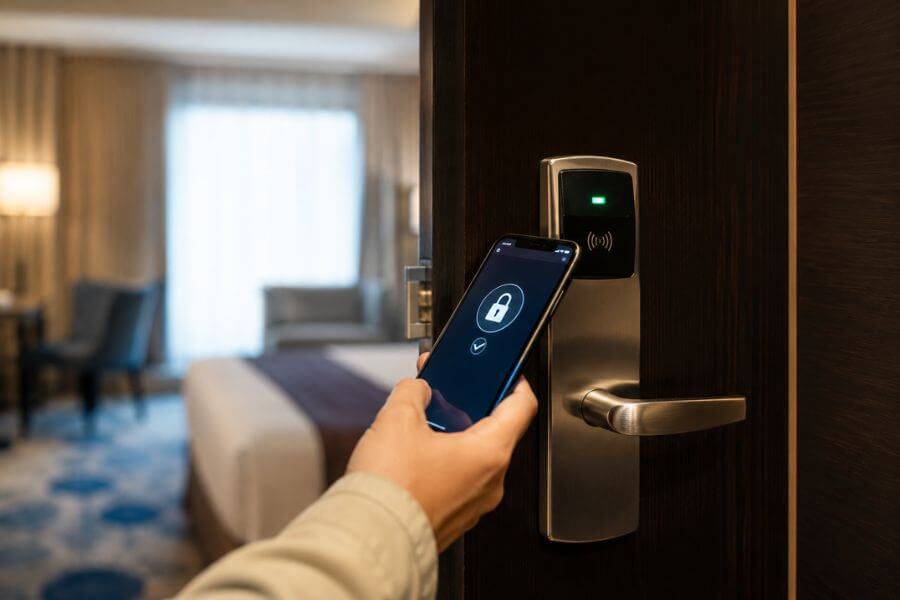
Digital key systems use your smartphone to unlock doors using secure wireless connections. The moment your room is clean and ready, your phone gets a secure notification with your room number and a digital token. You just walk up to your door, hold your phone near the lock, and listen for the happy little click that means you are home.
This creates a smooth flow that expert travelers call zero-friction travel. You control your timeline. If you want to go straight to your room to wash your face before seeing anyone, you can. If you want to skip the main floor entirely and take the elevator up, you have the power to do so.
By removing the plastic card, hotels also remove a major point of irritation. Staff members no longer spend their days fixing broken cards or handing out replacements. Instead of performing tech support for plastic rectangles, workers can spend their energy on real hospitality work, like setting up surprise treats for someone celebrating a birthday or bringing extra pillows to a room.
The Secret Rise of the Lobby Host
When guests start using their phones to check in and unlock doors, something amazing happens to the hotel lobby. It stops looking like a crowded bank or a busy airport terminal and starts feeling like a cozy living room.
Hotels around the world are redesigning their public spaces because they do not need huge desks anymore. They are replacing long counters with comfortable couches, warm fireplaces, and coffee bars. The staff members who used to be trapped behind computers are now stepping out into the lounge as lobby hosts.
Without a computer screen blocking their view, these hosts can see what guests actually need. If they see a parent struggling with a crying toddler, they can walk over with a toy or a snack. If they spot a traveler looking confused over a map, they can sit down next to them and point out the best local sandwich shops.
Worker Roles Reimagined
- The Old Front Desk Clerk: Trapped behind a high counter, focused on data entry, tied to a desktop computer, bound by automated scripts, stressed by growing physical lines.
- The Modern Lobby Host: Mobile and active on the floor, focused on guest comfort, armed with a tablet for quick help, free to have natural conversations, relaxed and attentive to small details.
This shift makes the worker feel more valued too. No one goes into the hospitality business because they love typing addresses into databases or sliding credit cards through readers. People join this industry because they love meeting new people, sharing local culture, and making visitors feel happy. Contactless tools give workers their true jobs back. They get to be hosts, guides, and friendly helpers rather than data entry clerks.
Personal Service Done Right
A common myth is that technology makes experiences generic and identical. People worry that if a computer handles your stay, the hotel will treat everyone exactly the same way. In reality, modern software does the exact opposite: it remembers the little details that humans might forget, allowing for high levels of personal care.
Imagine you stay at a hotel and mention to a worker that you love green tea instead of coffee, or that you prefer extra towels because you have long hair. In the old days, that detail might be forgotten the second that worker went home for the night.
With modern hotel software, those small details are saved in a secure profile connected to your digital account. The next time you book a room, whether it is next week or next year, the system flags your preferences automatically. When you walk into your room, you will find a sparkling kettle, a selection of green teas, and a neat stack of fluffy towels waiting for you.
The system does not replace the human action; it acts as a smart helper for the staff. It ensures that the team always knows what makes you happy, even if you are meeting a staff member who has never seen you before. This blend of smart memory and human touch makes you feel deeply understood and cared for during your entire trip.
Communication on Your Own Terms
Not everyone wants to talk to a person every time they need a fresh towel or a bottle of water. For some travelers, especially younger people or introverts, picking up a heavy room phone to call downstairs can feel awkward or annoying. You might worry about bothering the staff, or you might just prefer to use text messages like you do with your friends.
Modern hotel tech introduces smart text platforms and mobile apps that let you text the hotel team directly. If you need more soap, you just send a quick text while relaxing on the bed. If you want to know what time the pool closes, you drop a message into a chat window.
Communication Choices Compared
| Action | Old Phone System | Modern Digital Chat |
| Ordering Amenities | Call down, wait on hold, explain your room number, hope they write it down right. | Send a quick text, get an instant text confirmation, track the delivery progress. |
| Asking for Local Tips | Walk to the desk, wait for the helper to finish a call, get a paper map with marker lines. | Text the host, get digital map links, see photos of recommendations instantly. |
| Reporting a Problem | Call maintenance, wait for an unknown amount of time, wonder if anyone is coming. | Log a quick request, get live status updates, know exactly when a worker will arrive. |
This digital chat setup does not mean a robot is answering you. On the other end of that text line is a living, breathing hotel worker sitting at a central station. Because they can answer multiple text messages at the same time without phone lines getting crossed, they do not feel rushed. They can send you links to their favorite parks, share exact directions, and use fun emojis that make the conversation feel light and friendly.
For you, this means you get help on your own schedule without stopping your day. You can text the hotel to order extra blankets while you are sitting at a dinner table blocks away, knowing they will be waiting in your room when you get back. It keeps you connected to human help without forcing you to stand in a line or wait on hold.
Reclaiming Time for Special Moments
Every minute a hotel worker spends doing a robotic task is a minute they cannot spend doing something truly creative or kind. Think about a busy afternoon when hundreds of people are trying to check into a resort at the same time. The staff is entirely focused on matching names to room numbers. They do not have a single second to create special memories for the guests.
When digital tools handle that massive wave of check-ins, the hotel staff can look around the property for ways to surprise people. They can spend time setting up beautiful welcome gifts, writing handwritten welcome notes, or organizing fun lobby events like cookie decorations or live music hours.
Consider a real-world example of how this plays out. A hotel host notices through the digital system that a couple checking in through their mobile phone is celebrating their anniversary. Because the host does not have to spend the afternoon doing paperwork, they have the time to run down to the kitchen, ask the chef to prepare a special plate of chocolate strawberries, and leave it in the room with a warm card before the couple even opens the door.
These are the moments that define true hospitality. You do not remember a stay because the front desk worker typed your name correctly. You remember a stay because someone took the time to make you feel special. Technology gives the staff the precious gift of time, and they use that time to make your trip unforgettable.
Empowering Hotel Teams to Shine
Happy workers make happy guests. It is an open secret in the travel world that working the front desk of a busy hotel can be a tough job. Employees often face angry lines, confusing computer glitches, and endless repetitive tasks that drain their energy. When workers are tired and stressed, it is very hard for them to offer a genuine, warm welcome.
Contactless technology serves as a great safety valve for hotel teams. It takes away the loudest complaints and the most boring parts of the day. When the computer handles repetitive questions like “What time is breakfast?” or “Where is the elevator?”, the staff gets a break from the noise.
With this digital support, workers feel more relaxed and powerful. They can come to work knowing they will spend their time solving real problems and connecting with interesting people from all over the world. They have the freedom to move around the property, chat with guests, and show off their true customer service skills.
When you interact with a staff member who is relaxed, happy, and fully supported by good technology, you can feel the difference immediately. Their smile is real, their helpful attitude is genuine, and they have the energy to ensure your stay is absolutely perfect.
Frequently Asked Questions
Does contactless technology mean I will never see a real human during my hotel stay?
Not at all. It simply changes when and where you see them. Instead of standing in a boring line to talk to a worker behind a big wooden desk, you will meet staff members out in the lobby, at the lounge bar, or near the entrance. They will be free to talk, walk around with you, and help you find things instead of being stuck typing on a computer screen all day.
What happens if my smartphone battery dies and my room key is digital?
You never have to worry about being locked out. Hotels that use digital keys always keep backup options ready. You can walk up to any lobby host or visit a self-service station to get a physical card or access link in seconds. The staff can see your identity securely in their system and get you back into your room immediately.
Is my personal information and credit card data safe when using these phone systems?
Yes, it is highly secure. Modern contactless hotel systems use advanced data protection systems called tokenization. This means your real card numbers and ID details are turned into secure digital codes that cannot be easily stolen or copied. It is often much safer than handing your physical plastic card to a stranger at a desk where anyone could look at the numbers.
Can older travelers or people who do not like smartphones still get traditional help?
The technology is an extra option, not a strict rule. If you love using your phone to skip lines, the tools are there for you. If you prefer to talk to a traditional desk clerk and have them hand you a physical card, the hotel team is still fully available to do that. The goal is to give everyone the choice to travel exactly how they feel most comfortable.
How do smart text systems help if I speak a different language than the hotel staff?
This is one of the coolest benefits of digital messaging. Many hotel chat platforms have built-in translation tools that work instantly. If you text a request in your native language, the system can translate it for the staff member in English. When they reply in English, the system translates it back to your language automatically, making communication easier than ever.
Will these digital updates make hotel rooms and service more expensive for guests?
In most cases, it actually helps keep costs stable. When a hotel operates smoothly and does not waste money on printing paper forms or replacing thousands of lost plastic cards, they save a lot of money on business operations. These savings help the hotel maintain fair room rates while upgrading the quality of their public spaces and guest services.