Key Takeaways
Before you pack your bags for your next big trip, think about how you want to spend your time. You can stand in long lines to look at old buildings, or you can dive right into the heart of a new culture. Here is a quick look at why changing your travel style will change your life.
- Make Real Connections: You get to work side-by-side with local teachers who love what they do.
- Build Lifelong Skills: You learn how to make authentic things that you can recreate at home.
- Support Small Businesses: Your money goes directly to the artists and creators in the town you visit.
- Create Better Memories: The things you make with your own hands tell a much bigger story than a simple picture.
| Travel Style | What You Do | How It Feels | The Result |
| Sight-Seeing | Stand and look at famous landmarks from a distance. | Passive and sometimes a bit lonely or boring. | A phone full of photos that look like everyone else’s. |
| Sight-Doing | Join local classes and use your hands to create things. | Active, exciting, and full of deep personal connection. | A handmade souvenir and a brand-new skill for life. |
Imagine stepping off a plane and skipping the long lines at the famous museum. Instead, you walk down a quiet side-street, open a wooden door, and smell fresh clay, warm spices, or rich leather. You are not here to look at things behind glass. You are here to make things yourself. This is the world of sight-doing, where you become part of the story instead of just watching it happen. Let us explore the best local workshops around the world that are truly worth the trip.
The Big Shift from Looking to Doing
For a very long time, travel was all about checking items off a list. You would go to a city, stand in front of a giant statue, take a quick picture, and walk away. But looking at things from the outside can leave you feeling empty. You do not really get to know a place just by staring at its walls.
Sight-doing changes all of that. When you choose to do instead of just see, you jump over the barrier that separates tourists from locals. You sit at the same table with people who have lived in that town for generations. You get your hands dirty, you ask questions, and you laugh when you make mistakes. This kind of travel stays with you long after you return home.
When you look at a beautiful painting in a gallery, you admire the artist. But when you sit in an art studio and learn how to mix the paints yourself, you understand the culture on a whole new level. You start to see the world through the eyes of the people who live there.
Flavor Workshops That Teach Deep Traditions
Food is the quickest way to understand a new culture. Every ingredient tells a story about the land, the weather, and the history of the people. Taking a cooking class in a foreign country is nothing like reading a recipe book at home. It is an adventure for all your senses.
Hand-Rolled Pasta Masters in Italy
In the heart of sunny Italy, grandma-led classes teach you the true secrets of making fresh pasta. You do not use fancy machines here. You start with a simple pile of flour on a wooden board. You make a small well in the center, crack fresh eggs into it, and start mixing with your fingers.
The local teachers show you how to feel the dough. They teach you that the air in the room and the warmth of your hands change how the dough behaves. You learn to roll it out until it is so thin you can see through it.
- The Secret Technique: Learning the rhythmic roll of the wooden pin.
- The Best Part: Sitting down at a long table to eat your creation with fresh tomato sauce and local olive oil.
- What You Take Home: The ability to host amazing dinner parties for your friends.
The Art of the Perfect French Pastry
Paris is full of beautiful bakeries, but baking your own flaky treats is a magical experience. A pastry workshop guides you through the slow process of layering cold butter into soft dough. This process creates the hundreds of tiny layers that make a pastry puff up in the oven.
The kitchen smells like warm sugar and rich butter. The chef watches your movements and helps you adjust your style. You learn how to cut the dough into perfect triangles and roll them into neat shapes.
- Key Skill Learned: Keeping the butter cold while working quickly with your hands.
- Why It Is Worth It: You learn the science behind baking that recipes never tell you.
Spice Blending in Vibrant Morocco
Walking through a market in Morocco can overwhelm your senses. A spice-blending workshop helps you understand the sea of colors and scents. A local master guides you through rows of deep red paprika, bright yellow turmeric, and warm brown cinnamon.
You learn how to balance sweet flavors with savory ones. You use a heavy stone tool to crush whole seeds into a fine powder. By the end of the day, you create your own signature mix to use on roasted meats and vegetables at home.
| Workshop Type | Main Tool Used | Time Needed | Skill Level |
| Pasta Making | Large wooden rolling pin | Three hours | Beginner |
| Pastry Baking | Cold marble table and knife | Four hours | Medium |
| Spice Blending | Heavy stone mortar and pestle | Two hours | Beginner |
Craft Workshops to Make Useful Objects
There is a special joy in making something useful out of raw materials. When you travel to places known for specific crafts, you can learn directly from the masters of the trade. These workshops let you create high-quality items that will last a lifetime.
Leather Working in the Heart of Spain
Spain has a rich history of leather craft. In small mountain towns, workshops open their doors to travelers who want to make their own wallets, belts, or small bags. You start by choosing your piece of leather from large rolls that smell of earth and wood.
The master artisan shows you how to use sharp tools to cut clean lines. You learn how to punch holes using a heavy mallet and stitch the pieces together using thick, waxed thread. It requires patience and a steady hand.
- The Tool Kit: Awls, needles, edge-bevelers, and wooden slickers.
- The Big Lesson: True quality takes time and cannot be rushed by machines.
- Your Souvenir: A beautiful leather item that grows softer and prettier as the years pass.
Wooden Toy Carving in Japan
In the quiet forests of Japan, woodworkers spend decades perfecting their craft. A toy-carving workshop introduces you to the gentle nature of working with sweet-smelling cedar and cypress wood. You start with a simple block of wood and a very sharp knife.
The teacher shows you how to follow the grain of the wood. You learn to slice away thin shavings until a shape starts to appear. The focus is on smooth movements and respect for the tree that gave the wood.
- The Atmosphere: Quiet, peaceful, and filled with the sound of slicing wood.
- The Unique Benefit: It feels like a meditation that clears your mind of stress.
Traditional Pottery Throwing in Greece
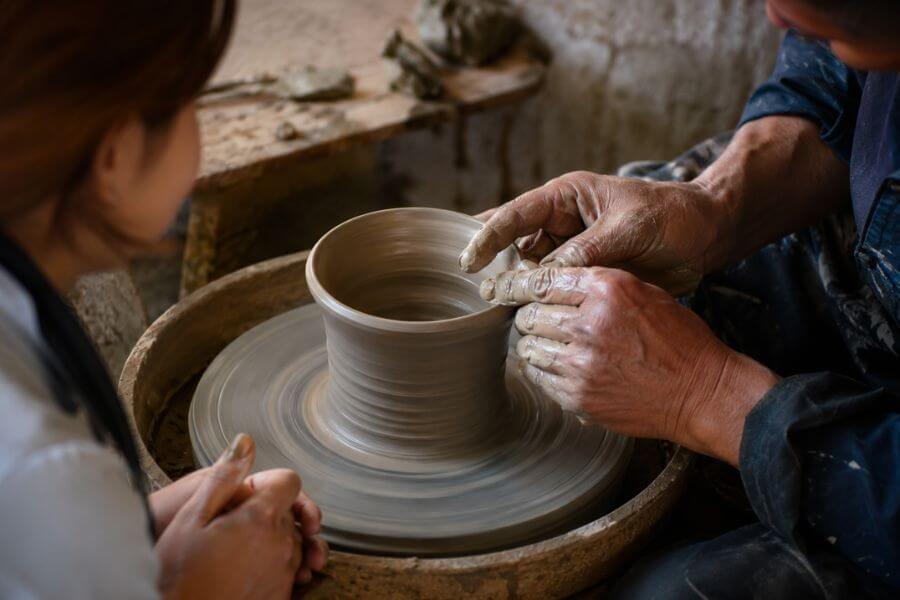
Greek pottery has been famous for thousands of years. Sitting down at a spinning pottery wheel lets you connect with that ancient history. The wet clay feels cool and slippery in your hands as the wheel spins around and around.
A local potter places their hands over yours to show you how much pressure to apply. A tiny push can change the shape of your pot completely. It teaches you to be completely present in the moment.
- What You Learn: How to center the clay on a spinning wheel using your body weight.
- The Fun Part: Getting covered in mud while creating a beautiful bowl or vase.
Fiber Arts and Fabric Design Workshops
The clothes and blankets we wear tell deep stories about where we come from. Learning how to create textiles connects you to the historical patterns of a culture. You can discover how natural plants turn into bright dyes and how simple threads turn into complex art.
Indigo Dyeing in Rural Japan
Indigo is a plant that creates a deep, beautiful blue color. In traditional Japanese workshops, large vats of this natural dye are kept in the floor. You learn the art of fabric manipulation, where you fold, tie, or bind cloth with strings and wooden blocks before dipping it into the blue liquid.
When you pull the cloth out of the vat, it looks green at first. As the air touches it, the color magically turns into a rich blue. Unrolling the cloth reveals gorgeous white patterns against the dark blue background.
- The Magic Moment: Watching the green color transform into bright blue in the open air.
- What to Pack: Old clothes that you do not mind getting stained with blue spots.
Rug Weaving with Families in Peru
High up in the mountains of Peru, families still spin wool and weave blankets just like their ancestors did. A weaving workshop lets you sit on the floor with these master weavers. You learn how they collect plants, bugs, and rocks to create brilliant reds, yellows, and greens.
You work on a simple frame loom made of wood. The local women show you how to cross the threads to build traditional patterns that represent mountains, rivers, and stars.
- The Cultural Connection: Learning the hidden meanings behind every geometric shape in the fabric.
- The Experience: Sharing sweet coca tea and stories with the weaving family.
Block Printing in Colorful India
India is famous for its bright and intricate cotton fabrics. In block-printing workshops, you use heavy wooden blocks that are carved by hand with beautiful designs of flowers, birds, and leaves. You dip these blocks into thick paint and press them firmly onto long sheets of cotton fabric.
You have to line up the blocks perfectly by eye to create a continuous pattern. It takes a steady hand and a good rhythm to keep the print looking even across the whole cloth.
- The Challenge: Keeping the pressure exactly the same with every single stamp.
- The Reward: Walking away with a custom scarf or curtain that you printed yourself.
| Craft Style | Primary Material | Color Source | Difficulty |
| Indigo Dyeing | Cotton or silk cloth | Fermented indigo plant leaves | Low |
| Rug Weaving | Thick sheep or alpaca wool | Wild plants, berries, and insects | High |
| Block Printing | Fine cotton fabric | Natural mineral paints | Medium |
Building the Perfect Trip Around Sight-Doing
Planning a trip around workshops is a bit different than a normal vacation. You cannot just wing it and hope for the best. These special experiences require some careful thought to make sure you get the most out of your time.
How to Find Authentic Local Teachers
The best workshops are usually not found on big tourist websites. You have to dig a little deeper to find the real hidden gems. Look for small community centers, local artist cooperatives, or family-owned businesses.
You can also read small travel blogs written by people who love slow travel. When you find a workshop, send a message to the teacher directly. Ask them about their story and what they love to teach. This helps you build a friendly connection before you even arrive in their country.
- Look For: Workshops that limit their class size to four or five people.
- Avoid: Large tourist factories that push fifty people through a quick demonstration.
Balancing Active Class Time with Relaxation
Learning a new skill can be tiring for your mind and body. You do not want to fill every single hour of your trip with intense classes. The best way to design your schedule is to do one workshop session in the morning when your energy is high.
Leave your afternoons completely open. You can use this free time to wander through local parks, sit in quiet coffee shops, or write about your experiences in a travel journal. This gives your brain time to process all the new things you learned.
Why This Way of Traveling Matters for the World
Sight-doing is not just great for you as a traveler. It also has a huge positive impact on the communities you choose to visit. It creates a better kind of tourism that protects traditions and helps local economies thrive.
Keeping Ancient Traditions Alive
Many traditional crafts are dying out because young people move to big cities for office jobs. When travelers show up and are willing to pay to learn these skills, it gives the crafts new value. It shows the younger generation that their family traditions are precious and worth saving.
Your interest helps keep these ancient arts alive for many more years. It turns a historical skill into a viable way for a family to make a good living.
Direct Support for Local Communities
When you buy a standard tour package, most of your money goes to large international corporations. But when you book a workshop directly with a local artist, every single dollar stays in that neighborhood.
Your money helps the artist buy more materials, support their children, and keep their studio open. You can see exactly where your funds are going, and you know you are doing something good for the world.
“When you look at a culture, you are a stranger. When you work with a culture, you become a friend.”
Frequently Asked Questions
What if I am not creative or good with my hands?
You do not need any past experience to join these workshops. The local teachers are very patient and know how to help beginners. They break every step down into small parts so you can follow along easily. The goal is to learn and have fun, not to make a flawless piece of art.
How do I bring my handmade items back home on a plane?
Most workshop teachers are experts at packing items for long trips. They will help you wrap fragile pottery in thick bubble wrap or pack your crafts into flat boxes that fit neatly inside your suitcase. If you make something very large, they can often help you set up safe shipping to your home address.
Are these workshops safe for young kids and families?
Many workshops are wonderful for families. Classes like pasta making, spice blending, or block printing are perfect for children because they are highly tactile and fun. Always check with the teacher before booking to make sure they have tools and steps that are safe and comfortable for younger creators.
Do I need to speak the local language to take a class?
Not at all. While some teachers speak great English, others might use simple hand movements and signs to show you what to do. You will find that watching someone work with their hands is a universal language. It is amazing how well you can communicate through smiles, nods, and shared work.