Australia is famous for its beautiful beaches, unique wildlife, and wide open landscapes. You have probably heard jokes about Australia being full of dangerous animals, but the truth is more interesting than the myths. While many Australian animals can be dangerous, most of them avoid people whenever possible. Serious encounters are actually rare when you know where these creatures live and how to stay safe around them.
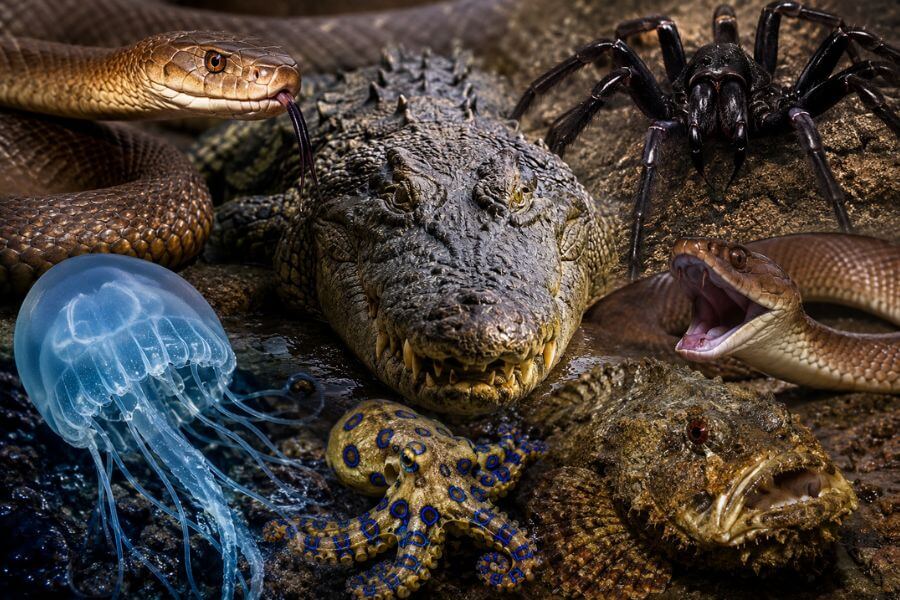
In this guide, you will discover the 10 most dangerous animals in Australia, where they actually live, and why they deserve respect. Some live deep in the ocean, others hide in rivers, forests, deserts, and even suburban areas. Understanding their habitats can help you enjoy Australia’s natural beauty while staying safe.
Quick Summary Table 🦈
| Rank | Animal | Main Danger | Where They Actually Live |
|---|---|---|---|
| 1 | Box Jellyfish | Extremely powerful venom | Northern Australian coastal waters |
| 2 | Saltwater Crocodile | Powerful attacks | Northern rivers, estuaries, and coastlines |
| 3 | Inland Taipan | Most toxic snake venom | Remote inland Queensland and South Australia |
| 4 | Sydney Funnel-Web Spider | Highly dangerous venom | Sydney region and surrounding areas |
| 5 | Stonefish | Venomous spines | Tropical coastal waters and reefs |
| 6 | Blue-Ringed Octopus | Neurotoxic venom | Coastal rock pools and reefs |
| 7 | Bull Shark | Aggressive behavior in shallow water | Rivers, estuaries, and coastlines |
| 8 | Eastern Brown Snake | Responsible for many snakebite incidents | Eastern Australia |
| 9 | Cassowary | Powerful kicks and claws | Tropical rainforests of Queensland |
| 10 | Tiger Snake | Strong venom and defensive behavior | Southern Australia wetlands |
How We Ranked These Animals 🏆
We ranked these animals using several important factors:
- How dangerous their venom, bite, or attack can be
- Number of recorded human injuries or fatalities
- Likelihood of people encountering them
- Ability to cause severe medical emergencies
- Aggressiveness when threatened
- Difficulty of avoiding them in their natural habitat
- Potential risk to tourists, hikers, swimmers, and residents
1. Box Jellyfish 🪼
The box jellyfish is often considered the most dangerous animal in Australia. Its venom is so powerful that it can affect the heart, nervous system, and skin within minutes.
These jellyfish are mostly found in the warm tropical waters of northern Australia, particularly around Queensland, the Northern Territory, and parts of Western Australia. They are most common during the warmer months between October and May.
Their tentacles can stretch several meters and contain millions of microscopic stinging cells. A severe sting can cause extreme pain, breathing difficulties, and even cardiac arrest.
The good news is that many popular beaches in northern Australia use stinger nets during jellyfish season. If you are swimming in tropical waters, always pay attention to local warnings and safety signs.
2. Saltwater Crocodile 🐊
The saltwater crocodile is the largest living reptile on Earth and one of Australia’s most feared predators.
These massive animals live across northern Australia, including northern Queensland, the Northern Territory, and northern Western Australia. They can be found in rivers, mangrove swamps, estuaries, beaches, and even open ocean areas.
A large saltwater crocodile can exceed 20 feet in length and weigh more than a ton. They are powerful ambush predators that can launch explosive attacks from the water’s edge.
Many visitors wrongly assume crocodiles only live in remote rivers. In reality, they sometimes appear near beaches, boat ramps, and fishing locations. Following local warnings is extremely important in crocodile country.
3. Inland Taipan 🐍
The inland taipan holds the title of the world’s most venomous snake based on venom toxicity.
Interestingly, it is not responsible for many human deaths because it lives in remote areas far from major population centers. You can find it in isolated parts of western Queensland and northeastern South Australia.
The snake’s venom contains powerful toxins that can affect blood clotting, muscles, and organs. Without treatment, a bite could be fatal.
Despite its fearsome reputation, the inland taipan is usually shy and avoids human contact. Most Australians will never encounter one in the wild because of its remote habitat.
4. Sydney Funnel-Web Spider 🕷️
The Sydney funnel-web spider is one of the most dangerous spiders in the world.
It primarily lives in and around Sydney, including suburban gardens, forests, parks, and bushland. These spiders often hide in moist, sheltered locations such as under rocks, logs, and leaf litter.
What makes this spider particularly dangerous is its willingness to defend itself. Males may wander into homes, garages, and swimming pools while searching for mates.
Its venom can affect the nervous system quickly. Fortunately, modern antivenom has greatly reduced fatalities. Even so, any suspected funnel-web bite should be treated as a medical emergency.
5. Stonefish 🪨
The stonefish is one of the most venomous fish in the world and one of the easiest marine animals to accidentally step on.
Stonefish are found in tropical waters along northern Australia, especially near reefs, rocky areas, and shallow coastal environments.
Their camouflage is remarkable. They look almost exactly like rocks or coral-covered debris. Because they blend in so well, people often fail to notice them until it is too late.
When stepped on, sharp dorsal spines inject venom that causes intense pain and serious medical complications. Protective footwear can greatly reduce the risk when walking in shallow tropical waters.
6. Blue-Ringed Octopus 🔵
The blue-ringed octopus may be small, but it carries venom powerful enough to paralyze humans.
These octopuses are found along Australian coastlines, particularly in rock pools, coral reefs, and shallow coastal waters.
When threatened, bright blue rings appear on their bodies as a warning signal. Unfortunately, many people mistake them for harmless or attractive marine creatures and attempt to touch them.
Their venom can cause paralysis and breathing difficulties. The safest approach is simple: admire them from a distance and never handle any wild octopus.
7. Bull Shark 🦈
Bull sharks are among the most dangerous sharks because they can live in both saltwater and freshwater.
In Australia, they are commonly found along the eastern and northern coasts. They frequently enter rivers, estuaries, harbors, and shallow coastal waters.
Unlike some shark species that prefer deep ocean environments, bull sharks often swim close to areas where people fish, surf, and swim.
While shark attacks remain rare overall, bull sharks are involved in a significant number of incidents worldwide because of their habitat preferences and powerful build.
8. Eastern Brown Snake 🤎
The eastern brown snake is responsible for many serious snakebite incidents in Australia.
It is widely distributed across eastern Australia, including Queensland, New South Wales, Victoria, and South Australia. It can be found in forests, grasslands, farmland, and even suburban neighborhoods.
This snake is fast-moving and highly alert. It often lives near rodents, which means it can sometimes be found around farms and residential areas.
Although bites are uncommon, the venom can be extremely dangerous. Staying aware of your surroundings and avoiding tall grass without proper footwear can reduce risk significantly.
9. Cassowary 🐦
The cassowary is often called the world’s most dangerous bird.
These large flightless birds live in the tropical rainforests of northeastern Queensland. They play an important role in rainforest ecosystems by spreading seeds.
Cassowaries are generally not aggressive unless they feel threatened or have become accustomed to receiving food from humans.
Their powerful legs and sharp claws can inflict serious injuries if they kick. Most negative encounters occur when people approach them too closely or attempt to feed them.
The safest strategy is to give cassowaries plenty of space and never encourage interaction.
10. Tiger Snake 🐯
The tiger snake is another highly venomous Australian snake that deserves respect.
It lives across southern Australia, including Tasmania, Victoria, South Australia, and the coastal regions of Western Australia.
Tiger snakes are often found near wetlands, rivers, lakes, and marshes where they hunt frogs and other prey.
When threatened, they may flatten their necks and display defensive behavior. Their venom can cause severe illness if left untreated.
Fortunately, modern medical care and antivenom have dramatically improved outcomes for snakebite victims. Most bites occur when people accidentally disturb the snake.
Conclusion 🌅
Australia is home to some of the world’s most fascinating and potentially dangerous animals. However, these creatures are not actively hunting people. Most incidents happen when humans accidentally enter their habitat, ignore warnings, or try to interact with wildlife.
By understanding where these animals actually live, you can explore Australia more confidently and safely. Whether you are visiting tropical beaches, hiking through rainforests, fishing in rivers, or exploring the outback, awareness is your best form of protection.
The reality is that Australia remains a safe destination for travelers. Respect wildlife, follow local advice, and keep a safe distance from animals, and your chances of experiencing problems are extremely low.
Frequently Asked Questions ❓
Are dangerous animals found everywhere in Australia?
No. Most dangerous animals live in specific regions. For example, saltwater crocodiles are mainly found in northern Australia, while Sydney funnel-web spiders are concentrated around the Sydney area.
What is the deadliest marine animal in Australia?
The box jellyfish is generally considered the deadliest marine animal due to its extremely potent venom and the speed at which symptoms can develop.
Is it safe to swim at Australian beaches?
Yes. Millions of people safely enjoy Australian beaches every year. Following local safety advice, swimming between lifeguard flags, and paying attention to warnings greatly reduce risks.
Which dangerous Australian animal is most commonly encountered?
The eastern brown snake is one of the most commonly encountered dangerous animals because it lives across a large portion of populated eastern Australia.
Do Australian cities have dangerous wildlife?
Some cities do contain dangerous wildlife. For example, funnel-web spiders can be found in Sydney suburbs, and certain snake species occasionally appear in urban and suburban areas. However, serious encounters remain uncommon.