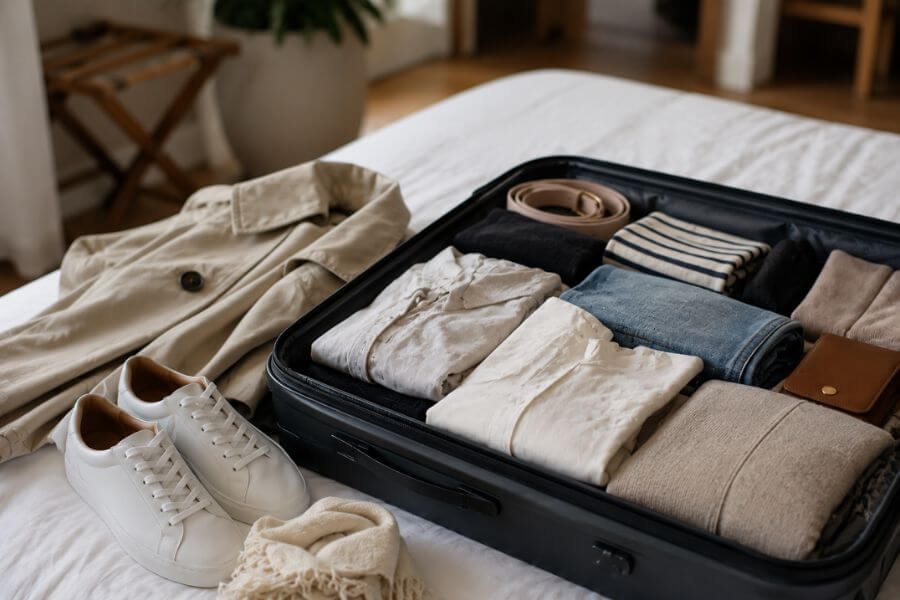
Key Takeaways for Stress-Free Packing
- The Core Formula: Pick a base color (like black or navy), add coordinating neutrals, and use two accent shades to create dozens of outfits from just twelve items.
- The Layering Rule: Wear your heaviest items on the plane to save bag space and prepare for shifting cabin temperatures.
- Fabric Choice Matters: Stick to breathable materials that resist wrinkles and dry overnight in a hotel room.
- Versatility First: Every top must match every bottom, and every shoe must work for a full day of walking.
Imagine opening your suitcase after a long flight across the ocean and finding exactly what you need. No wrinkles, no heavy bags to drag up old stone stairs, and no morning stress about what to wear. Packing a smart collection of matching clothes lets you focus on the beautiful sights instead of your closet. This guide will show you how to build a perfect travel wardrobe so you can look great and move freely on your next big adventure.
The Core Concept of Packing Light
Traveling to another country brings enough surprises on its own. You do not need your luggage to be one of them. A capsule wardrobe is a small collection of clothes where every piece works together. When you pack this way, you stop packing for specific days. Instead, you pack for options. You can mix and match a tiny number of items to make enough outfits for weeks of exploring.
This method relies on a simple rule: every top you pack must match every bottom you pack. If a shirt only works with one specific pair of pants, it stays at home. By following this approach, you can turn four tops and three bottoms into twelve different looks. Add a dress or a jacket, and your options grow even more.
Packing light also saves you from common travel headaches. You will not have to pay extra fees for heavy bags at the airport. You can carry your own luggage onto buses and trains without needing help. Most importantly, you spend less time managing your things and more time enjoying your trip.
Choosing Your Perfect Color Palette
The secret to making a small wardrobe work is your color choice. If you pack random bright colors, you will find it hard to mix your clothes. A smart color plan keeps everything working together smoothly. You want to choose colors that look great side-by-side so you can get dressed in the dark.
Selecting Your Base Color
Your base color is the foundation of your suitcase. This color will appear in your heaviest and most expensive items, like your pants, jackets, and shoes. Most travelers choose dark colors for their base because they hide dirt and stains very well. Black, navy blue, and charcoal gray are excellent choices. They look classic, clean, and professional in almost any country.
Adding Coordinating Neutrals
Once you have your base color, you need to add supporting neutral colors. These are lighter shades that soften your look and match your base perfectly. White, cream, beige, light gray, and khaki work beautifully here. These colors are usually found in your basic t-shirts, button-down shirts, and light sweaters. They keep your outfits from looking too dark or heavy.
Picking Your Accent Colors
Accent colors add personality to your wardrobe. They keep your photos from looking like you wore the exact same outfit every single day. Choose one or two accent colors that make you feel happy and look good against your skin. Great options include olive green, soft burgundy, dusty blue, or mustard yellow. You can use these colors in a couple of shirts, a scarf, or a light sweater.
Fabric Selection for Global Adventures
The materials you choose can make or break your trip. Some fabrics trap heat and sweat, while others wrinkly the moment you sit down in an airplane seat. You want to look for fabrics that breathe well, dry quickly, and handle being folded tightly for long periods.
Merino wool is a favorite for global travelers. It keeps you warm when it is chilly and stays cool when the sun comes out. It also naturally resists odors, meaning you can wear it multiple times before washing it. High-quality cotton blends are also great for daily wear because they feel soft and familiar.
For active days, synthetic fabrics like polyester and nylon blends are excellent. They pull moisture away from your skin and dry incredibly fast. Linen looks beautiful in hot weather, but it wrinkles very badly. If you love the linen look, search for a linen-cotton blend that gives you the same style with fewer creases.
The Essential Twelve Pieces
To keep your packing simple, we will focus on a twelve-piece clothing system. This collection fits into a standard carry-on bag with plenty of room left over for your toothbrush and tech gear. Here is the breakdown of what you should bring.
The Reliable Tops
You will want to pack a total of five tops. This includes two basic crewneck t-shirts in your neutral colors, one long-sleeve shirt for sun protection or cooler evenings, one classic button-down shirt, and one stylish blouse or knit top in an accent color. This variety ensures you have shirts for casual walking tours and nicer dinners.
The Versatile Bottoms
Bring three bottoms that fit comfortably and look sharp. One pair of dark-wash jeans is perfect for casual days and evenings out. Add one pair of lightweight trousers or chinos in a neutral shade like khaki or gray. For the third option, pick something suited to the weather, like tailored shorts for tropical spots or comfortable leggings for long transit days.
The Outerwear and Layers
Layers are your best friend when weather changes quickly. Pack one light sweater or cardigan that layers easily over your t-shirts. Bring one weather-resistant jacket, like a sleek denim jacket or a utility coat, that guards against wind and light rain. You will wear your heaviest jacket on the plane to keep your bag light.
The Final Multi-Use Pieces
To round out your collection, add one versatile dress or a matching set. A simple dark dress can be dressed down with sneakers for daytime sightseeing or dressed up with a nice scarf and jewelry for the theater. This gives you an extra outfit option without taking up much space.
Footwear Designed for Heavy Walking
Your shoes are the most important choice you will make for your trip. A painful blister can ruin an entire afternoon of exploring historical sites. You only need to bring two pairs of shoes, or three at the absolute maximum, for an overseas journey.
The Daily Walking Shoe
Your primary shoe should be a clean, supportive sneaker. Look for a pair in a solid neutral color like white, black, or gray. Leather or high-quality canvas styles look neat enough to wear into museums and casual restaurants. Make sure you break them in at home for a few weeks before your flight leaves.
The Elevated Option
Your second pair should be slightly dressier but still comfortable enough for a stroll. Low loafers, stylish flats, or sturdy leather boots work well depending on the season. Avoid high heels completely, as they are dangerous on European cobblestones and uncomfortable during long travel days.
Mastering the Art of Outfit Combinations
Now that you have your pieces, it is time to see how they work together. You can create different styles just by switching your tops and layering your outerwear. Here is a helpful comparison of how to style your core pieces for different activities.
| Activity Level | Daytime Sightseeing | Evening Dinner | Transit and Flying |
| Top Choice | Neutral Crewneck T-Shirt | Accent Blouse or Knit Top | Long-Sleeve Shirt |
| Bottom Choice | Lightweight Trousers | Dark-Wash Jeans | Comfortable Leggings |
| Layering Piece | Utility Jacket | Light Cardigan | Heavy Travel Jacket |
| Shoe Choice | White Walking Sneakers | Leather Loafers | White Walking Sneakers |
By changing your layers, you can go from an outdoor market to a fancy café without returning to your hotel room. A simple shirt change updates your entire look instantly.
Smart Packing Strategies and Techniques
How you put your clothes into your bag is just as important as what you choose to bring. If you throw everything in loosely, you will run out of space quickly and end up with a mess of wrinkled fabric.
Rolling your clothes instead of folding them flat saves an incredible amount of space. It also prevents hard creases from forming in your shirts and pants. Lay your clothes face down, smooth out the wrinkles, fold the sleeves inward, and roll tightly from the bottom up.
Using lightweight packing cubes keeps your suitcase organized. You can use one cube for tops, one for bottoms, and a separate small one for undergarments. This makes it simple to find what you need without unpacking your entire bag every evening.
Managing Your Laundry on the Road
Packing light means you will need to wash your clothes at some point during your trip. This does not mean you have to spend your precious vacation time inside a boring laundromat.
You can wash small items like socks and t-shirts right in your hotel sink. Fill the basin with warm water and a small splash of liquid soap or travel detergent. Swish the clothes around, let them soak for ten minutes, rinse thoroughly, and squeeze the water out gently.
To help your clothes dry faster, lay a wet clothing item flat on a clean hotel towel. Roll the towel up tightly with the clothing inside, like a sleeping bag, and step on it. The towel will absorb the extra water, and your clothes will dry on a hanger in just a few hours.
Adapting Your Capsule to Different Climates
The twelve-piece system works everywhere, but you should adjust the specific items based on where you are flying. A trip to sunny beaches requires different materials than a trip to frosty mountain towns.
Hot and Tropical Destinations
For warm climates, swap out the heavy trousers for breathable linen blends or breezy skirts. Keep your tops loose and light. Replace the heavy jacket with a super light shirt that protects your shoulders from the hot sun. Do not forget to swap the heavy boots for comfortable, supportive sandals with good straps.
Cold and Winter Destinations
For chilly climates, your layers become even more critical. Keep the exact same number of items, but make sure your long-sleeve options are made of warm fabrics like merino wool or fleece. Add a thin thermal undershirt that fits secretly beneath your regular clothes. Choose a thick, insulated coat as your main outerwear piece and wear it during your flights.
Frequently Asked Questions
How can I make my outfits feel fresh without packing more clothes?
You can completely change the look of an outfit by using lightweight accessories. A colorful scarf, a classic belt, or a unique pair of earrings takes up almost zero space in your bag but draws attention to your face. You can also change your hairstyle or wear a different hat to create a brand new look in your daily photos.
What should I do if my clothes get very wrinkled in my bag?
Hang your wrinkled clothes on hangers in the hotel bathroom while you take a hot shower. The steam from the shower will naturally relax the fabric fibers and pull most of the creases out. You can also buy a tiny bottle of wrinkle-release spray at the airport, which works wonders when sprayed onto fabric and smoothed out with your hands.
How many pairs of underwear and socks should I pack for a two-week trip?
You do not need to pack fourteen pairs of everything. Pack five to seven pairs of underwear and socks. This amount takes up very little space and allows you to go a full week before you need to do a quick sink wash. Stick to fast-drying materials so they are ready to wear again by the next morning.
Will people notice that I am wearing the same clothes multiple times?
Local people in the countries you visit will not notice at all because they see you for only a few moments. Your travel companions will be too busy looking at the amazing sights to care about your pants. If you mix up your tops and layers, your outfits will look different enough that your photos will still feel fun and varied.
How do I protect my white sneakers from getting dirty while exploring?
Before you leave home, spray your clean sneakers with a fabric protector spray. This creates a shield that turns away water and mud. While you travel, carry a small pack of wet wipes in your daypack. If you scuff your shoes on a dusty path, you can wipe them down immediately before the dirt sets into the material.