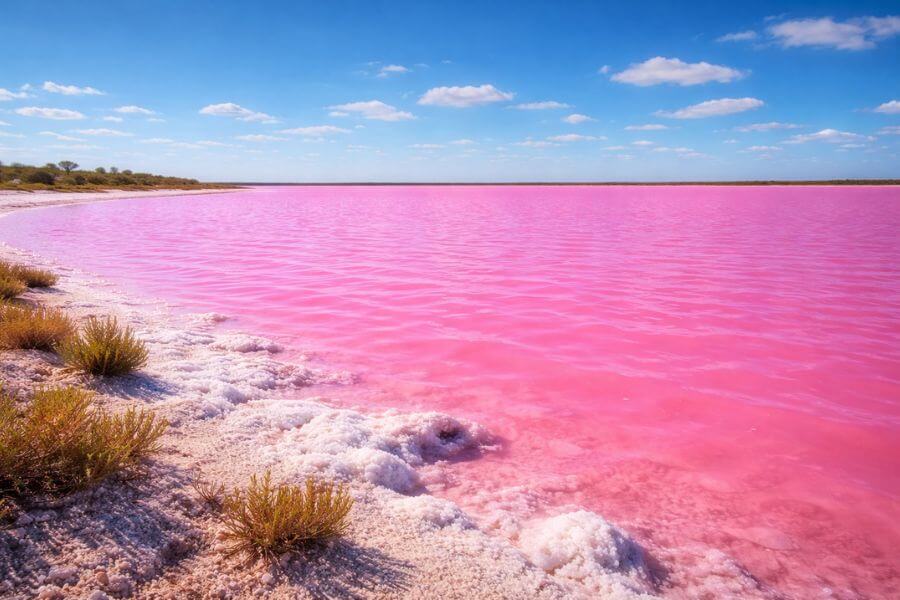
Australia is home to some of the most unique natural wonders in the world, and pink lakes are among the most eye-catching. These lakes get their stunning color from natural algae and high salt levels, creating shades that range from soft pastel pink to deep red. If you love unusual landscapes or want to upgrade your travel photos, visiting a pink lake is something you should add to your bucket list. In this guide, you will discover ten of the best pink lakes across Australia, along with helpful tips so you can plan your trip with confidence.
1. Lake Hillier, Western Australia
Lake Hillier is one of the most famous pink lakes in Australia, known for its bright bubblegum pink color. Located on Middle Island near Esperance, this lake keeps its color all year round, even when you collect water in a bottle. The contrast between the pink water, white sand, and deep blue ocean is truly unforgettable. Since the island is remote, the best way to see it is by scenic flight, which gives you a perfect aerial view.
2. Hutt Lagoon, Western Australia
Hutt Lagoon, also known as Pink Lake near Port Gregory, is one of the easiest pink lakes to visit. Its color can change depending on the time of day and season, ranging from lilac to bright pink. You can drive right alongside the lake and stop for photos at multiple viewpoints. It is a great destination if you want a simple and accessible pink lake experience.
3. Lake MacDonnell, South Australia
Lake MacDonnell is famous for its stunning contrast between pink and blue water. A narrow road runs between two sides of the lake, creating a unique photo opportunity where one side is bright pink, and the other is turquoise. Located near Penong on the Eyre Peninsula, this spot is perfect if you enjoy road trips and dramatic landscapes.
4. Lake Eyre, South Australia
Lake Eyre, also known as Kati Thanda Lake Eyre, is the largest salt lake in Australia. While it is not always pink, it can turn shades of pink when water levels and algae conditions are right. The lake is best viewed from the air due to its massive size. Visiting during the right season can reward you with a rare and beautiful pink glow across the landscape.
5. Pink Lake, Victoria
Located in Murray Sunset National Park, Pink Lake in Victoria offers a peaceful and scenic experience. The lake often appears pink during dry and sunny conditions. Surrounded by nature and wildlife, it is a great place if you want a quiet escape away from crowded tourist spots. Bring your camera because the soft pink tones look amazing during sunrise and sunset.
6. Lake Bumbunga, South Australia
Lake Bumbunga is one of the most photographed pink lakes in South Australia. Its color can shift between pink, white, and blue depending on the weather and salt levels. Located near the town of Lochiel, it is an easy stop if you are driving north from Adelaide. You might even spot the famous lake monster sculpture that adds a fun twist to your visit.
7. Lake Albert, South Australia
Lake Albert, near Meningie, can sometimes show pink hues during dry seasons when salt concentration increases. While it is not always bright pink, the lake still offers a beautiful and calm setting. It is ideal if you prefer less crowded places and want to enjoy a relaxing day by the water.
8. Lake Warden, Western Australia
Lake Warden is part of the Esperance region and is known for its changing colors, including pink tones during certain times of the year. The surrounding wetlands are also home to many bird species, making it a great spot for nature lovers. A visit here gives you both stunning views and a chance to see local wildlife.
9. Quairading Pink Lake, Western Australia
Quairading Pink Lake is a hidden gem located inland from Perth. It is less crowded than other pink lakes, making it perfect if you want a quiet and relaxed visit. The color is strongest during warmer months, and the wide open surroundings make it feel peaceful and untouched.
10. Lake Crosbie, Victoria
Lake Crosbie is another beautiful pink lake found in Murray Sunset National Park. It is part of a group of salt lakes that can turn pink under the right conditions. The area is great for camping and exploring, so you can take your time enjoying the scenery. If you love outdoor adventures, this lake is a fantastic choice.
Conclusion
Visiting pink lakes in Australia is a unique experience that you will not forget. Each lake offers something different, from bright and vibrant colors to peaceful and remote settings. To make the most of your trip, try to visit during warm and sunny weather when the pink color is strongest. Always check local conditions before you go, as the color can change depending on the weather. Whether you are planning a road trip or a scenic flight, these pink lakes will give you some of the most beautiful views in Australia.
Frequently Asked Questions
Why are some lakes in Australia pink?
Pink lakes get their color from natural algae and bacteria that produce red pigments. High salt levels and sunlight help these organisms grow, which creates the pink color you see.
When is the best time to visit the pink lakes?
The best time to visit is during hot and dry weather, usually in summer. This is when salt levels are higher, and the pink color is more visible. Early morning and late afternoon also offer great lighting for photos.
Are pink lakes safe to swim in?
Some pink lakes are safe to visit, but not all are suitable for swimming due to high salt levels. Always check local advice before entering the water to make sure it is safe.
Do pink lakes stay pink all year?
No, many pink lakes change color depending on weather, salt levels, and time of year. Some lakes, like Lake Hillier, stay pink year-round, but others may fade or change color.
What should you bring when visiting a pink lake?
You should bring essentials to stay comfortable and safe during your visit:
- Water and snacks
- Sunscreen and a hat
- Camera or smartphone for photos
- Comfortable shoes for walking
- A map or GPS if visiting remote areas