Key Takeaways
Before we dive into the details, here is a quick look at why handmade items hold so much power over factory-made goods.
| Aspect | Handcrafted Souvenirs | Store-Bought Goods |
| Primary Value | Deep emotional connection | Instant usefulness |
| Memory Life | Lasts for generations | Fades after a few months |
| Uniqueness | Completely one-of-a-kind | Mass-produced by the thousands |
| Story Behind It | Part of your personal journey | Just a transaction at a counter |
| Local Impact | Supports real artists directly | Benefits giant corporations |
Think back to your last big trip. What do you remember most? Is it the plastic keychain that cracked before you even unpacked your bags, or is it that small, hand-carved wooden bowl you bought directly from the person who made it? We often grab quick trinkets because they are right in front of us. But the things we make or buy from local creators hold a special magic that factory-made items can never replicate. Let us explore why handmade keepsakes are the ultimate way to lock in your favorite travel moments forever.
The Magic of the Making Process
When you choose a handmade item, you are not just buying an object. You are capturing a slice of time. Every single piece tells a story of creation, patience, and human touch.
The Time Investment
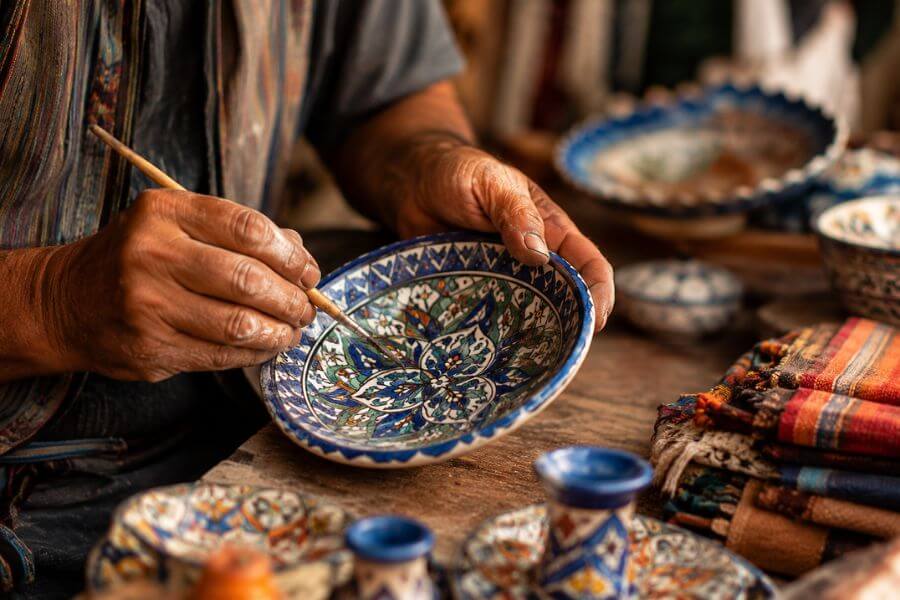
Think about the hours that go into creating something by hand. An artist sits at a workbench, shaping clay, weaving threads, or sanding wood. This slow process is the exact opposite of modern factories. When you look at a handmade bowl, you see the time someone gave up to make it. That time transfers to you when you bring the item home. It makes the object feel heavy with meaning, rather than light and empty.
Human Imperfection as a Strength
No human being is a perfect machine. When someone makes a basket or paints a canvas, their hands might slip just a tiny bit. This leaves tiny marks, uneven lines, or unique color shifts. These are not mistakes. They are the signature of the creator. A machine-made plastic cup is perfectly smooth, but it looks exactly like millions of others. A handmade clay mug has a unique personality. You can feel the thumbprints of the maker on the handle. That makes it real, alive, and deeply personal.
The Connection to the Location
Handmade items are born from the ground you walk on during your travels. A local artist uses clay from nearby hills, wood from native trees, or wool from local sheep. When you buy these items, you take a literal piece of that country home with you. A plastic gadget made in a giant factory halfway across the world does not connect you to the beach you visited or the mountain you climbed. It connects you to a shipping container.
Emotional Value Versus Price Tags
We live in a world where it is easy to buy things. You can click a button and have a package arrive the next day. But easy buying does not lead to deep feelings.
Why Money Cannot Buy Memories
You can spend a lot of money on an expensive watch or a designer shirt while on vacation. At first, you feel excited. But that excitement is about status and spending, not about the trip itself. A few years later, that shirt is out of style, and the watch is just another tool. A handcrafted item often costs much less, but its value grows over time. It grows because it is tied to your feelings, not your wallet.
The Contrast of Joy
Let us look at how our brains handle these different types of purchases.
- Material Goods: Give a quick spike of happiness that drops off fast.
- Handcrafted Souvenirs: Give a steady glow of happiness every time you look at them.
When you buy a factory item, the joy is in the getting. When you buy a handmade item, the joy is in the living with it. It becomes part of your home environment and your daily life.
Material Good:  [High Excitement] ---> [Drops Quickly] ---> [Forgotten in Closet]
Handmade Good:  [Warm Connection] ---> [Stays Steady]   ---> [Family Heirloom]
Building Your Personal History
Your home is like a museum of your life. The items you put on your shelves tell visitors who you are. Filling your space with mass-produced items makes your home look like a store catalog. Filling it with handmade items from your travels turns your home into a storybook. Every corner holds a conversation starter. You can tell guests about the rainstorm you walked through to find that tiny art studio, or the kind smile of the woman who spun the yarn for your blanket.
How Handcrafted Goods Wake Up Your Senses
Our brains are wired to remember things through our senses. The more senses an object activates, the stronger the memory becomes.
The Sense of Touch
Texture is a powerful memory trigger. Run your fingers across a hand-woven rug. You can feel the bumps, the ridges, and the thickness of the material. This physical feeling sends signals to your brain that bring back the weather, the sights, and the sounds of the place where you got it. A smooth, plastic souvenir feels cold and lifeless. It does not give your fingers anything to lock onto.
The Power of Scent
Natural materials hold onto smells for a very long time. A souvenir made of cedar wood will smell like the forest for years. A leather wallet made by a local craftsman carries a rich, smoky scent that stays with it. Every time you open that wallet to pay for groceries back home, that smell acts like a time machine. It whisks you right back to that sunny market square in Europe or South America.
Visual Depth and Color
Factory items use synthetic dyes that look flat and identical. Handcrafted items often use natural dyes made from plants, roots, or insects. These colors have a deep warmth that changes depending on the light in your room. A hand-painted ceramic tile has layers of glaze that catch the morning sun differently than the afternoon shade. This visual depth keeps the object interesting to look at, meaning you will never get tired of seeing it on your wall.
The Great Comparison: Handcrafted vs. Mass-Produced
To really see why handmade items win the battle for your memory, we need to compare them side-by-side across different categories.
Durability and Care
People often think factory items last longer because they are made of tough plastic or metal. But when a plastic item breaks, it is trash. You cannot fix it. When a handmade wooden chest or a hand-knitted sweater gets old, it gains character. You can repair it, stitch it up, or oil the wood. This care actually makes you love the item more.
Environmental Impact
Buying handmade is a great way to care for our planet. Local artists do not run giant coal-burning factories. They do not ship millions of boxes across oceans in huge cargo ships. They use local materials and simple tools. Choosing their work reduces waste and keeps our earth cleaner.
| Feature | Handcrafted Keepsakes | Mass-Produced Souvenirs |
| Material Base | Wood, clay, wool, stone | Plastic, cheap metal, polyester |
| Production Speed | Slow and intentional | Fast and non-stop |
| Carbon Footprint | Low and local | High and international |
| Repair Option | Easy to fix by hand | Almost impossible to fix |
| Aging Process | Looks better with age | Looks worse as it wears down |
Supporting Real People and Local Cultures
When you travel, you are a guest in someone else’s home country. Buying handcrafted items is a beautiful way to say thank you to the community that welcomed you.
Keeping Traditions Alive
In many parts of the world, art skills are passed down from grandparents to children over hundreds of years. This includes special ways of weaving, pottery-making, or metal-working. If nobody buys these items, the young people in those villages will leave to work in factories, and the ancient skills will disappear forever. Your purchase helps keep an entire culture alive. It tells the artist that their heritage is valuable to the world.
Direct Financial Help
When you buy a souvenir in a big airport gift shop, most of your money goes to rich owners and distribution networks. The person who actually made the item gets pennies, if anything. When you buy directly from an artist at a market stall, your money goes straight into their pocket. It pays for their food, their children’s school books, and their art supplies. That creates a beautiful circle of human support.
True Cultural Exchange
Buying handmade often involves a conversation. You might not speak the same language as the artist, but you can point, smile, and nod. They show you how they work, and you show your admiration. This moment of connection becomes a core memory of your trip. The object you take home becomes a symbol of that human friendship, which is worth far more than any cheap plastic toy.
The Psychological Power of Souvenirs
Why do we even want to collect things when we travel? Science shows that humans have a deep need to anchor their memories to physical things.
Objects as Memory Anchors
Our brains are full of busy thoughts. It is easy to forget the small details of an amazing vacation as the months roll by. A handcrafted souvenir acts like an anchor for your brain. When your eyes land on it, it unlocks a flood of memories. You suddenly remember the taste of the local food, the laugh of your travel partner, and the feeling of freedom you had during that week.
The Danger of Materialism
When we accumulate too many factory-made things, our homes feel cluttered. This clutter causes stress. We start to look at our things as chores or mess that needs to be cleaned up. Handmade items do not feel like clutter. They feel like art. They lift your mood instead of weighing you down because they represent experiences rather than just ownership.
Passing Stories Down the Line
What happens to your things when you get old? Your kids and grandkids will probably throw away your old plastic phone cases, cheap sunglasses, and factory keychains. But they will keep that beautiful hand-carved statue or that hand-woven blanket. They will pass it down to their own children, along with the stories of your travels. Handcrafted items have the power to live forever as family heirlooms.
How to Find Authentic Handcrafted Souvenirs
Now that you know why these items are so valuable, you need to know how to find them on your next trip. It takes a little bit of effort to skip the tourist traps, but it is well worth it.
Step-by-Step Guide to Finding Real Art
1. Move away from major tourist spots: Explore side streets.
The shops right next to famous monuments almost always sell cheap, mass-produced items. Walk three or four blocks away into the quiet neighborhoods where local people actually live and work.
2. Look for working studios: Watch the creation happen.
Seek out shops where you can see a kiln, a loom, or a workbench in the back. If you hear the sound of a hammer or smell fresh paint, you know you are in the right place.
3. Ask the shopkeepers questions: Learn the backstory.
Ask who made the item, what materials they used, and how long it took. A real artist or local seller will be proud to share these details with you. If they look confused or give vague answers, the item was likely imported.
4. Check for unique markers: Inspect the item closely.
Look for tiny differences between identical items on the shelf. If every single item looks exactly the same down to the millimeter, they were made by a machine. Look for those beautiful human variations.
What to Avoid
Be careful of stores that use signs claiming items are local when they are not. Giant gift shops with bright flashing lights and massive piles of inventory are rarely selling real handmade art. Trust your gut. Real art studios usually feel quiet, personal, and full of pride.
Creating Your Own Keepsakes
You do not always have to buy handcrafted items from others. You can also make your own souvenirs during your travels. This takes the memory connection to an even deeper level.
Travel Journaling by Hand
Instead of just taking thousands of photos on your digital phone, buy a notebook with thick, textured paper. Sit down in a cafe for fifteen minutes every day. Write down what you saw, paste in bus tickets, and press local flowers between the pages. The physical act of writing with a pen creates a lasting memory pathway in your brain. Years later, flipping through that paper journal will feel incredibly special.
Taking Local Art Classes
Many destinations offer short workshops for travelers. You can spend an afternoon learning how to make pottery in Japan, paint with watercolors in Italy, or weave a basket in Africa. The item you create might not look as perfect as something made by a professional master, but it will be filled with your own sweat, laughter, and learning. That makes it the most valuable souvenir possible.
Collecting Natural Elements Safely
Sometimes, the best handmade souvenir is a collection of natural items you arrange yourself. You can collect small sea shells from a beach, unique smooth river stones, or fallen pinecones from a deep forest. When you get home, place them in a beautiful glass jar or arrange them on a wooden tray. You did not buy anything, but you used your own hands and creativity to build a physical reminder of the natural world you explored.
Making the Shift for Future Travel
As you plan your next adventure, challenge yourself to think differently about shopping. Change your mindset from gathering objects to gathering stories.
Budgeting for Quality Over Quantity
Instead of spending ten dollars here and there on twenty different plastic items, save that money. Put it all together to buy one significant, beautiful, handmade piece at the end of your trip. You will have less stuff to carry in your suitcase, and you will have an item that you truly love for the rest of your life.
The Long-Term Joy of Minimalism
A home filled with a few precious, handmade items feels peaceful and creative. It reminds you of the wide world outside your daily routine. It helps you stay focused on what truly matters in life: experiences, human connections, and creativity. Let go of the need to buy cheap things just because they have the name of a city printed on them. Search for the heartbeat of the place instead.
Frequently Asked Questions
Why are handcrafted souvenirs more expensive than factory-made goods?
Handcrafted items cost more because you are paying for the artist’s time, years of training, and high-quality local materials. A machine can stamp out thousands of plastic items in an hour for pennies. A human being might spend three days making a single ceramic vase. When you pay a higher price, you are ensuring the artist can make a fair living wage and continue their valuable work.
How can I be sure an item is truly handmade and not factory-made?
The easiest way is to look for tiny imperfections and variations. Check two copies of the same item side-by-side. If the brushstrokes, carving depths, or yarn knots are slightly different, it is handmade. You can also look at the bottom or inside of the item for maker marks or signatures. Shopping directly at an artist studio or a local cooperative market is another great way to guarantee authenticity.
What should I do if I have very limited space in my luggage for heavy souvenirs?
You do not need to buy large statues or heavy rugs to get the benefits of handmade goods. Look for small, lightweight items like hand-painted bookmarks, embroidered patches, hand-carved wooden spoons, or small silver jewelry pieces made by local smiths. These items take up almost no room in your bag but still hold all the emotional weight and story value of larger pieces.
Can kids appreciate handcrafted souvenirs as much as adults do?
Yes, absolutely. Children love stories. If you take a child to watch a glassblower shape a glowing glass animal or a woodcarver create a small toy, they become fascinated. The item becomes special to them because they saw it come to life. It teaches them to value human labor and creativity over cheap plastic toys that break within a single afternoon.
How do I care for handmade items made of natural materials so they last?
Handmade items thrive with gentle care. Avoid using harsh chemical cleaners on hand-carved wood or natural ceramics. Use a soft, dry cloth to dust them. For wooden items, applying a little bit of natural beeswax or mineral oil once a year keeps the wood from drying out and cracking. Wash hand-woven textiles by hand in cool water with gentle soap instead of throwing them into a rough washing machine.