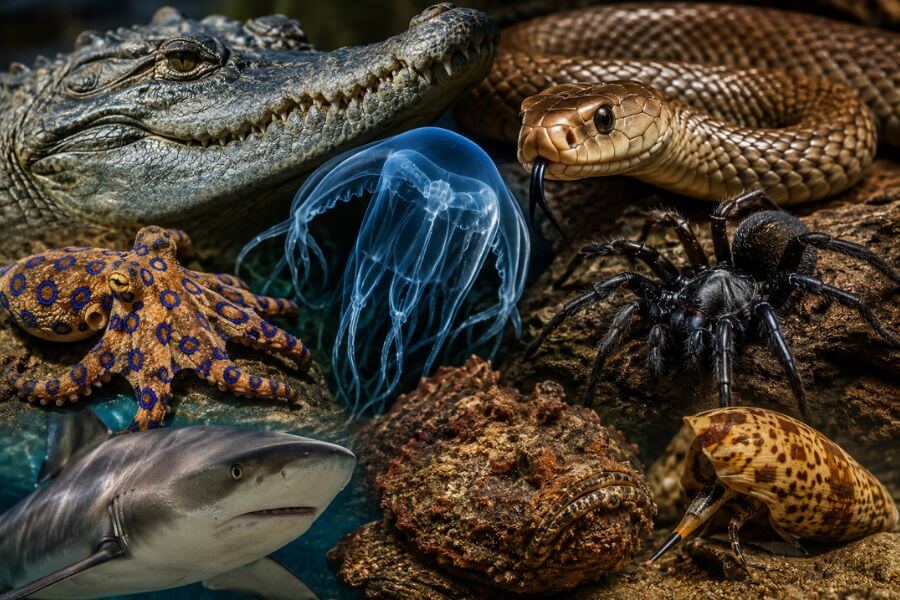
Australia is famous for its stunning beaches, massive deserts, colourful coral reefs, and unique wildlife. But if you are planning a trip around the country, you have probably heard stories about dangerous animals too. While most Australian wildlife prefers to avoid humans, some creatures can become a serious threat if you accidentally disturb them or enter their habitat.
The good news is that dangerous encounters are actually quite rare when you use common sense and follow local advice. Still, knowing what animals to watch for can help you stay safe while enjoying everything Australia has to offer.
In this guide, you will discover the most dangerous animals in Australia, where you are most likely to come across them, and what makes each one so risky.
Quick Summary Table 🦘
| Animal | Main Danger | Where You May Encounter Them | Risk Level |
|---|---|---|---|
| Box Jellyfish | Extremely venomous sting | Northern tropical beaches | Very High |
| Saltwater Crocodile | Powerful attacks | Northern rivers and coastlines | Very High |
| Eastern Brown Snake | Deadly venom | Grasslands, suburbs, farms | Very High |
| Funnel-Web Spider | Toxic bite | Eastern Australia gardens and forests | High |
| Blue-Ringed Octopus | Paralysing venom | Rock pools and shallow reefs | High |
| Bull Shark | Aggressive behaviour | Rivers, estuaries, beaches | High |
| Stonefish | Venomous spines | Tropical shallow waters | High |
| Sydney Paralysis Tick | Severe allergic reactions | Bushland and coastal forests | Medium to High |
| Cassowary | Powerful kicks and claws | Tropical rainforests in Queensland | Medium |
| Cone Snail | Venomous harpoon sting | Coral reefs and beaches | Medium to High |
How We Ranked These Animals 📊
We ranked these animals based on several important factors:
- How dangerous their venom, bite, sting, or attack can be
- How likely you are to encounter them in Australia
- The number of reported injuries or deaths linked to them
- How aggressive they can become around humans
- How difficult they are to spot before an encounter
- Whether tourists commonly visit their habitats
- The speed at which medical treatment may be needed
1. Box Jellyfish 🪼
The box jellyfish is often considered the most dangerous animal in Australian waters. Its tentacles contain venom that attacks the heart, nervous system, and skin all at once. A severe sting can become fatal within minutes if treatment is delayed.
You are most likely to encounter box jellyfish in the warm tropical waters of northern Australia, especially around Queensland, the Northern Territory, and northern Western Australia. They are most active between October and May.
These jellyfish are especially dangerous because they are nearly transparent in the water, making them difficult to spot. Even a brief touch can cause intense pain and serious medical emergencies.
If you visit tropical beaches during stinger season, you should always:
- Swim between safety nets where available
- Wear a stinger suit
- Follow local beach warnings carefully
- Avoid swimming alone
Despite their deadly reputation, most beach areas with known jellyfish risks are well monitored by local authorities.
2. Saltwater Crocodile 🐊
Saltwater crocodiles are the largest living reptiles in the world and one of Australia’s most feared predators. Some males grow longer than six metres and can weigh more than a tonne.
You are most likely to encounter them in northern Australia, especially in:
- Northern Territory waterways
- Far North Queensland
- Kimberley region in Western Australia
- Mangroves, rivers, estuaries, and coastal wetlands
Saltwater crocodiles are extremely powerful and highly territorial. Unlike many wild animals, they may actively approach humans if they feel threatened or see an opportunity to attack.
Tourists sometimes underestimate the danger because crocodile-infested waters may appear calm and peaceful. Swimming in prohibited areas is one of the biggest mistakes visitors make in northern Australia.
To stay safe:
- Never swim in waters marked with crocodile warnings
- Stay far back from riverbanks
- Avoid fishing near the water’s edge at dawn or dusk
- Never feed crocodiles
Local signs exist for a reason, and ignoring them can have deadly consequences.
3. Eastern Brown Snake 🐍
The eastern brown snake is responsible for more snakebite deaths in Australia than any other species. Its venom can cause paralysis, heart problems, and severe internal bleeding.
What makes this snake especially dangerous is how common it is. You may encounter eastern brown snakes in:
- Rural farms
- Bushland
- Suburban backyards
- Dry grasslands
- Walking trails
They are found across much of eastern and central Australia, including areas close to major cities.
Eastern brown snakes are usually shy, but they may become aggressive if cornered. During warmer months, they are more active and sometimes move into residential areas searching for food.
If you see one:
- Stay calm
- Slowly back away
- Never try to catch or kill it
- Call professional snake handlers if needed
Wearing proper footwear while hiking can greatly reduce your risk of snakebite.
4. Funnel-Web Spider 🕷️
Australia has many venomous spiders, but the funnel-web spider is among the most dangerous. The Sydney funnel-web is especially feared due to its highly toxic venom.
You are most likely to find funnel-web spiders in:
- Gardens
- Forests
- Wood piles
- Shoes left outdoors
- Damp areas around homes
They are most common in New South Wales and nearby regions.
Male funnel-web spiders tend to wander during warm and humid weather, which increases the chance of human encounters. Their bite can cause serious symptoms very quickly, including breathing difficulties and muscle spasms.
Fortunately, antivenom has dramatically reduced deaths from funnel-web bites.
To avoid problems:
- Wear gloves while gardening
- Shake out shoes before wearing them
- Keep outdoor areas tidy
- Seek medical help immediately after a bite
Even though they look terrifying, these spiders usually bite only when disturbed.
5. Blue-Ringed Octopus 🐙
The blue-ringed octopus may look small and beautiful, but it carries venom powerful enough to kill a human. Its bright blue rings become more visible when it feels threatened.
You may encounter these octopuses in:
- Tide pools
- Shallow reefs
- Coastal rock pools
- Beaches across Australia
Many people accidentally pick them up because they are small and appear harmless. This is where the danger begins.
Their venom can cause paralysis and breathing failure within minutes. One of the scariest parts is that bites are often painless at first.
If you are exploring rock pools or reefs:
- Never touch marine animals
- Wear reef shoes
- Watch where you place your hands
- Supervise children closely
Thankfully, blue-ringed octopuses are not aggressive and usually bite only when handled.
6. Bull Shark 🦈
Bull sharks are considered one of the most dangerous sharks in the world because they are aggressive and can survive in both saltwater and freshwater.
Unlike many other sharks, bull sharks often swim close to populated areas, including rivers and harbours. In Australia, they are commonly found in:
- Coastal rivers
- Estuaries
- Beaches along the east coast
- Murky shallow waters
Their ability to travel far inland surprises many people. Bull sharks have been spotted in rivers near busy urban areas.
Most shark encounters remain extremely rare, but bull sharks are known for unpredictable behaviour. Surfers and swimmers are more at risk in low-visibility water.
To reduce risk:
- Avoid swimming at dawn or dusk
- Stay away from murky water
- Avoid swimming near fishing activity
- Swim at patrolled beaches
Australia’s beaches are generally very safe when you follow local advice.
7. Stonefish 🪨
The stonefish is one of the most venomous fish in the world and is famous for its incredible camouflage. It blends perfectly with rocks and coral, making it very easy to step on accidentally.
You are most likely to encounter stonefish in:
- Tropical beaches
- Coral reefs
- Shallow coastal waters
- Northern Australian waters
The danger comes from venomous spines along its back. A sting causes extreme pain and may lead to shock or serious medical complications.
Because they are so difficult to see, many injuries happen when people walk barefoot in shallow water.
To protect yourself:
- Wear protective water shoes
- Shuffle your feet while walking in shallow water
- Avoid touching marine rocks unnecessarily
Most people recover fully with fast medical treatment, but the pain can be severe.
8. Sydney Paralysis Tick 🕸️
Ticks may seem less frightening than sharks or snakes, but the Sydney paralysis tick can be surprisingly dangerous. These tiny parasites attach to humans and animals while feeding on blood.
You are most likely to encounter them in:
- Coastal bushland
- Forest trails
- Long grass
- Humid eastern Australian regions
Their saliva can cause paralysis, allergic reactions, and serious illness in both pets and humans.
Ticks are especially active during warmer months. Campers, hikers, and pet owners are more likely to come into contact with them.
To lower your risk:
- Wear long sleeves and trousers in bush areas
- Use insect repellent
- Check your skin after outdoor activities
- Remove ticks carefully using proper methods
Early detection is very important because symptoms can worsen over time.
9. Cassowary 🐦
The cassowary is often called the world’s most dangerous bird. Although attacks are rare, these large flightless birds can become extremely aggressive when threatened.
Cassowaries live mainly in the tropical rainforests of Far North Queensland.
They have:
- Sharp claws
- Strong legs
- Powerful kicks
- Fast movement through dense forest
Most dangerous encounters happen when people try to feed them or get too close for photos.
A frightened cassowary may charge quickly and use its dagger-like claw to defend itself.
If you encounter one:
- Stay calm
- Do not run
- Back away slowly
- Never feed wildlife
Cassowaries play an important role in rainforest ecosystems and are generally peaceful when left alone.
10. Cone Snail 🐚
Cone snails may look like harmless beach shells, but some species contain venom strong enough to seriously injure or kill humans.
These marine snails use a tiny harpoon-like tooth to inject venom into prey. Their sting can cause paralysis, numbness, and breathing problems.
You are most likely to encounter cone snails in:
- Coral reefs
- Tropical beaches
- Tide pools
- Shallow coastal waters
People are often injured after picking up attractive shells without realising the animal inside is alive.
To stay safe:
- Never handle live shells
- Avoid touching unfamiliar sea creatures
- Wear footwear while exploring reefs
Cone snail stings are rare, but they should always be treated as medical emergencies.
Conclusion 🌅
Australia is home to some of the world’s most fascinating and dangerous animals, but that should not stop you from exploring the country. Millions of people safely enjoy Australian beaches, forests, deserts, and reefs every year without serious problems.
The key is awareness. When you understand where dangerous animals live and how to avoid risky behaviour, your chances of a negative encounter become extremely low.
Most Australian wildlife would rather avoid humans altogether. Respect nature, follow local warnings, and use common sense while travelling. If you do that, you can enjoy Australia’s incredible outdoors safely and confidently.
Frequently Asked Questions ❓
Are dangerous animal attacks common in Australia?
No, serious attacks are actually very rare. Australia has strict safety systems, warning signs, lifeguards, and medical services that help reduce risks significantly.
Which part of Australia has the most dangerous wildlife?
Northern Australia is generally considered the highest-risk region because it has saltwater crocodiles, box jellyfish, dangerous snakes, and other tropical species.
Is it safe to swim at Australian beaches?
Yes, most popular beaches are very safe, especially patrolled beaches. Always swim between the flags and follow local safety warnings.
What should you do if bitten or stung by a dangerous animal?
Seek medical help immediately. In Australia, emergency services are highly trained to deal with venomous bites and stings quickly.
Should tourists avoid hiking or camping in Australia because of wildlife?
Not at all. Hiking and camping are extremely popular activities across Australia. You simply need to prepare properly, stay alert, and respect the environment.