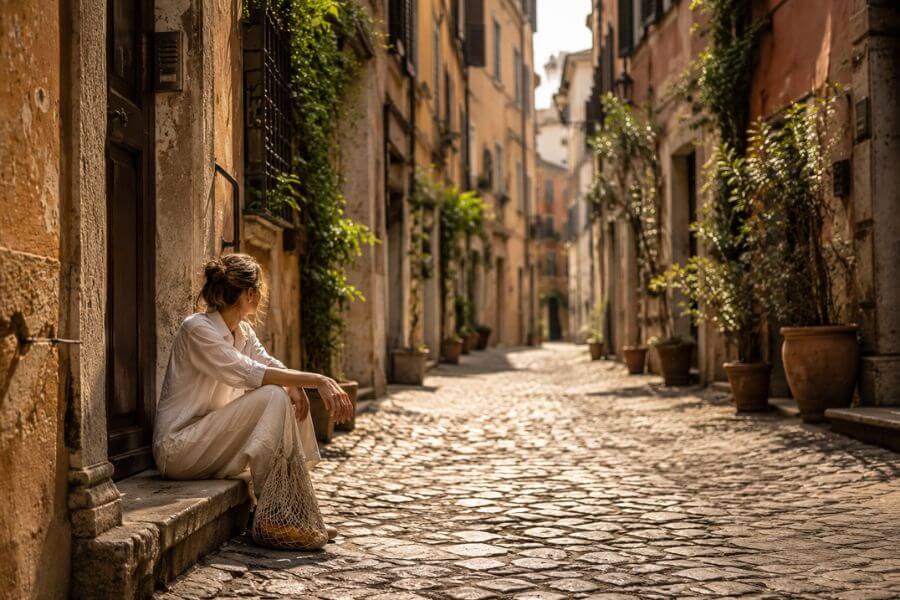
Key Takeaway: The Ultimate Shift in Travel
When you stop rushing through five countries in two weeks and choose to live in just one city for a full month, your entire relationship with travel changes. You move from being a stressed-out tourist who is just checking boxes to a relaxed local who actually experiences the rhythm of a community. Slow travel saves you money, cuts out the constant stress of packing, and allows you to form deep, lifelong connections with a single place and its people.
Welcome to the Art of Slow Travel
Imagine waking up to the smell of fresh bread from the bakery down the street. You do not have a train to catch. You do not have a massive line to stand in at a famous museum. Your bags are unpacked, your clothes are in a real closet, and the person behind the coffee counter already knows your name.
This is the reality of the slow travel movement. For decades, the mainstream travel industry told us that more is always better. We were taught to race through historic squares, snap a quick photo of a monument, and jump right back on a tour bus. But a growing number of people are realizing that this fast pace leaves them completely exhausted and empty.
By spending at least one month in a single city, you flip the script. You trade the superficial checklist for deep, real experiences. Let us dive into why staying put is the best travel decision you will ever make.
The Big Problem with the Fast-Travel Loop
Before we can look at why a full month in one place feels so magical, we need to look at the hidden costs of the fast-travel loop. Most traditional vacations feel like a second job. You spend months planning a tight itinerary, scheduling every single hour of your day, and trying to squeeze in as many cities as humanly possible.
The Exhaustion Factor
When you move to a new city every two or three days, your body never gets a chance to relax. You are constantly on the move, dragging heavy suitcases over cobblestone streets, and navigating confusing train stations. By day four, your brain is so tired that all the beautiful old churches and museums start to look exactly the same. You are not actually enjoying the world; you are just surviving a self-imposed obstacle course.
The Financial Drain
Fast travel is incredibly expensive. The most costly parts of any trip are transportation and short-term lodging. When you change cities every couple of days, you are constantly buying train tickets, booking flights, or paying high nightly rates at hotels. You also end up eating every single meal at expensive tourist-trap restaurants because you do not have a kitchen and you do not know where the locals go to buy affordable food.
The Illusion of Seeing the World
When you spend just forty-eight hours in a city like Paris, Tokyo, or Rome, you do not actually see that city. You only see the tiny, polished tourist zone designed specifically to take your money. You do not see how real families live, you do not visit the quiet neighborhoods, and you do not experience the true culture of the country. You leave with the exact same postcard views that millions of other people already have.
Financial Freedom: Why One Month Costs Less Than You Think
One of the biggest myths about slow travel is that staying in a place for a whole month must be crazy expensive. The opposite is actually true. When you break down the numbers, spending thirty days in one single city can often cost the exact same amount—or even less—than a hectic two-week sprint across a continent.
The Power of the Monthly Discount
Short-term rentals on popular booking platforms are set up to favor long-stay travelers. Landlords hate when their apartments sit empty between guests, so they offer massive discounts if you book a place for a full month. It is very common to see discounts ranging from thirty percent to fifty percent off the standard nightly rate. This means you could end up paying almost the exact same price for four weeks of housing as someone else pays for ten days.
Cooking Like a Local
Eating out three times a day is a massive budget-killer. When you rent an apartment for a month, you get a fully equipped kitchen. This allows you to visit the local grocery stores and neighborhood markets. You can buy fresh, regional ingredients and cook breakfast and dinner at home. This simple change cuts your food expenses in half. Plus, shopping at a local market is a wonderful cultural experience in itself.
Dropping the Heavy Transportation Costs
Think about how much money vanishes into planes, trains, and taxis when you travel fast. When you pick one city and stay there, your transit costs drop to almost zero. You can buy a monthly subway or bus pass, which is always highly discounted. Even better, you can explore most neighborhoods completely on foot, which is entirely free and keeps you healthy.
| Expense Category | Fast Travel (2 Weeks, 4 Cities) | Slow Travel (4 Weeks, 1 City) |
| Housing Rate | High nightly hotel prices | Major monthly apartment discount |
| Transport Costs | Multiple flights and train tickets | Single monthly bus or subway pass |
| Food Costs | Three restaurant meals every day | Mix of home cooking and local cafes |
| Activity Fees | Expensive, rushed tour packages | Free neighborhood festivals and walks |
| Total Value | Low value per dollar spent | High value per dollar spent |
The Psychological Shift from Tourist to Temporary Resident
There is a beautiful mental shift that happens around day seven of a month-long stay. The initial urgency to see everything starts to melt away. You realize you have plenty of time, which changes how you interact with your surroundings. You stop feeling like an outsider looking through a window and start feeling like you belong.
Goodbye, Checklist Stress
We all know the anxiety of the vacation checklist. You feel guilty if you sleep late or spend an afternoon reading a book in a park because you feel like you are wasting your precious, limited vacation time. When you have a whole month, that guilt disappears. If it rains all day, you can stay inside and watch a movie. If you feel tired, you can take a long nap. You have the freedom to follow your mood rather than a strict schedule.
Developing a Daily Routine
Human beings thrive on routine, and creating a temporary routine in a foreign city is incredibly satisfying. You find your favorite spot to buy morning pastries. You discover a quiet bench in a hidden park where you like to write. You figure out which days the street market has the freshest fruit. This routine grounds you and makes the foreign city feel like home.
True Cultural Absorption
You cannot absorb a culture in a weekend. Culture is found in the subtle things: how people greet each other, the specific times of day businesses close for a break, the music drifting out of apartment windows, and the way neighbors chat on the sidewalk. By staying for a month, you observe these patterns day after day. You begin to understand the unwritten rules of the society, which gives you a much deeper respect for the local way of life.
Building Real Connections with the Community
The most memorable parts of travel are never the static stone monuments or the famous museums. The moments that stick with you forever are the conversations you have and the people you meet. Fast travel makes it almost impossible to form real relationships. Slow travel opens the door wide open for genuine human connection.
Becoming a Regular Customer
When you go to the same neighborhood coffee shop every single day, the staff notices. By week two, they recognize your face. By week three, they know exactly what you want to order. By week four, you are having real conversations about their lives, their city, and their culture. You are no longer just a nameless face with a wallet; you are a regular part of their day.
Meeting Local Neighbors
Living in a residential apartment building means you share hallways, elevators, and courtyards with real local families. You will see them walking their dogs, coming home with groceries, and sending their kids off to school. A polite nod turns into a friendly hello, which can easily turn into an invitation to a neighborhood block party or a home-cooked dinner. These are the kinds of experiences that money simply cannot buy.
Supporting the Local Economy Directly
When you travel fast, your money usually goes to giant international airlines, global hotel chains, and massive tour corporations. When you live in a neighborhood for a month, your money stays directly in the community. You buy your meat from the local butcher, your veggies from the family-owned stand, and your clothes from independent neighborhood shops. You become a positive force in the local economy, which builds a lot of goodwill.
Discovering Hidden Places Regular Tourists Never See
Every major city has its famous landmarks that everyone knows about. But every city also has a secret world that is kept hidden away from the casual tourist crowds. You can only unlock this secret world when you have the luxury of time.
The Magic of the Outer Neighborhoods
Most tourists never leave the central downtown zone. But the true heart of any city lies in its outer residential neighborhoods. With a month at your disposal, you can pick a different subway stop every weekend and just start walking. You will find beautiful residential architecture, quiet canals, vibrant street art, and lovely community gardens that do not appear in any travel guide.
Finding the Best Food in Town
The best restaurants do not advertise in tourist brochures. They do not have menus translated into five different languages out on the sidewalk. They are hidden down quiet side-streets, packed with locals who have been eating there for generations. It takes time to find these places. You find them by asking your neighbors, exploring random alleyways, or noticing where a long line of locals forms on a Tuesday night.
Experiencing Seasonal Events and Festivals
When you are only in a town for two days, you miss out on the natural rhythm of the year. During a month-long stay, you are likely to witness a local holiday, a neighborhood street fair, an outdoor movie night in the park, or a weekend farmers market. These community-focused events give you a front-row seat to how the city celebrates life together.
Environmental Benefits: A Greener Way to See the Planet
The planet is under a massive amount of stress from global tourism. Planes, cruise ships, and tour buses emit huge amounts of carbon dioxide into the air. Fast travel is incredibly wasteful, but slow travel offers a much gentler, more sustainable way to see the world.
Reducing Your Total Carbon Footprint
The most polluting part of travel is the movement between destinations. If you take four flights to see four different cities in two weeks, your carbon footprint skyrockets. By flying to one single city and staying there for a month, you eliminate all those extra mid-trip flights and long train rides. You are keeping your pollution levels low and doing your part to protect the environments you love to visit.
Lowering Waste and Resource Consumption
Hotels create an unbelievable amount of waste. They wash sheets and towels every single day, use tiny plastic bottles for shampoo, and throw away massive amounts of leftover food from giant buffet breakfasts. When you live in an apartment, you manage your own resources. You wash your towels only when they are dirty, buy full-sized reusable products, and minimize your food waste just like you do at home.
Fighting the Bad Effects of Overtourism
Overtourism happens when too many visitors crowd into the exact same spot at the exact same time, destroying the quality of life for locals and wearing down historic structures. By choosing slow travel, you help spread out the tourist impact. You spend your time and money in non-touristy areas, which helps support the city without overwhelming its historic center.
Developing New Skills and Hobbies Along the Way
When you are on a standard fast-paced vacation, you do not have time for personal growth. You are too busy trying to stay on schedule. But a month-long stay gives you the rare gift of spare time in a brand-new environment. This is the perfect recipe for learning new skills.
Practicing the Local Language
Trying to learn a language from a book or an application on your phone is tough. The best way to learn is through immersion. When you live in a city for a month, you are forced to use the language every day. You practice when ordering food, asking for directions, or buying items at the store. The locals will appreciate your effort, correct your mistakes kindly, and help you improve at a rapid speed.
Taking Local Classes and Workshops
With four weeks in town, you can sign up for a weekly cooking class, a pottery workshop, a painting group, or a traditional dance course. Learning a local craft from a master artisan gives you an incredible appreciation for the regional heritage. Plus, it is a fantastic way to meet both locals and other long-term travelers who share your specific interests.
The Gift of Creative Time
New environments trigger creativity in the human brain. The sights, sounds, and smells of a new city wake up your senses. With a relaxed monthly schedule, you have the time to sit down and actually act on that creative energy. You can spend your afternoons sketching the city streets, writing a journal, taking creative photos, or working on a personal project without any pressure.
Remote Work and Slow Travel: The Perfect Modern Match
The way the world works has changed dramatically over the last few years. Millions of people can now work from absolutely anywhere with a laptop and a solid internet connection. This digital shift makes slow travel more accessible than it has ever been before.
Balancing Productivity and Adventure
Trying to work while traveling fast is a complete nightmare. You cannot answer important emails when you are running to catch a train or sitting in a noisy hostel lobby. But an apartment gives you a quiet, dedicated space to focus. You can work your normal hours during the day, and then step right out your front door into a whole new country for dinner and evening exploration.
Finding Co-working Communities
Almost every major city in the world now has a network of co-working spaces. These shared offices provide fast internet, comfortable desks, and great coffee. More importantly, they are hubs for the local creative and tech communities. Joining a local co-working space for a month instantly connects you to a network of like-minded professionals from all over the world.
The End of Vacation-Days Limits
When you combine your work with slow travel, you no longer have to worry about using up your limited vacation days. You do not need to pack all your travel goals into a tiny two-week window at the end of the year. You can live your normal life, earn your regular paycheck, and explore the globe all at the exact same time.
A Head-to-Head Breakdown of Travel Styles
To help visualize the difference, let us look at how two different people experience the exact same destination using different travel styles. This comparison table shows how a fast tourist and a slow traveler spend their time and energy over a typical trip.
| Travel Experience | The Fast-Travel Tourist | The Slow-Travel Resident |
| Packing Stress | Constant packing and unpacking every few days | Unpack once on day one and relax for the month |
| Morning Routine | Alarm clocks, rushed hotel breakfasts, strict tours | Slow mornings, local cafe visits, making own plans |
| Language Use | Learning only “hello” and “thank you” | Practicing full sentences with neighbors and vendors |
| Hidden Gems | Completely misses them due to lack of time | Discovers quiet parks, secret alleys, local spots |
| Physical Energy | Feels totally wiped out and needs a vacation after | Feels rested, healthy, inspired, and deeply content |
| Memory Quality | Blurred memories of monuments and transit | Crisp memories of real faces, conversations, places |
How to Choose Your Perfect Month-Long Destination
Not every city is built for slow travel. Some places are great for a quick weekend look but do not have enough depth to hold your interest for a full month. Choosing the right spot requires a bit of thought and planning.
Look for Walkable Infrastructure
The best slow-travel cities are places where you do not need a car to get around. Look for destinations with world-class public transit networks, extensive bike lanes, and highly walkable streets. Being able to step out of your apartment and explore safely on foot makes daily life infinitely more enjoyable and stress-free.
Check the Cost of Daily Living
While monthly discounts help with rent, you still need to pay for food, entertainment, and transit. Research the local cost of living before you commit. Pick a city where your home currency has strong purchasing power. This ensures you can enjoy the local restaurants, concerts, and museums without constantly stressing about your bank account balance.
Seek Out Cultural Depth
Choose a city that has a rich history, a diverse food scene, and a thriving arts culture. You want a place with plenty of distinct neighborhoods, museums, public libraries, parks, and cultural centers. This ensures that even on day twenty-five, you will still have brand-new places to explore and unique things to learn.
Tips for a Successful Month-Long Stay
Once you have picked your city and booked your apartment, there are a few simple strategies you should follow to make sure your month-long adventure goes smoothly.
- Do not overplan your days: Leave at least two or three days every week completely blank. Let your curiosity guide you instead of a strict calendar.
- Pick the right neighborhood: Do not stay right next to the main tourist hub. Pick a residential neighborhood that is a few subway stops away. This gives you a more authentic daily experience and cheaper grocery prices.
- Unpack your bags immediately: The very first thing you should do when you arrive is unpack your suitcases. Put your clothes in the drawers and hide your luggage out of sight. This small act signals to your brain that you are home, not just passing through.
- Say yes to local invitations: If a shopkeeper invites you to try a special tea, or a neighbor invites you to a community event, say yes. These random, unplanned interactions are where the real magic of travel happens.
The Long-Term Impact of Slow Travel on Your Life
When your month comes to an end and it is finally time to head home, you will notice something interesting. You do not just leave with a camera roll full of photos. You leave as a slightly different person.
Slow travel teaches you patience. It teaches you to slow down, to pay attention to the little details, and to appreciate the beauty of ordinary daily life. You realize that the world is not just a giant theme park built for your entertainment, but a beautiful tapestry of diverse communities filled with people who, despite their differences, share the exact same human joys and challenges.
The next time you sit down to plan a trip, step away from the fast-paced itineraries. Pick one spot on the map. Find a cozy apartment with a nice kitchen. Commit to staying there for a full month. Your travel memories—and your perspective on life—will thank you for it.
Frequently Asked Questions
What if I get lonely during a whole month in a single city?
It is completely natural to worry about loneliness when staying in a foreign place for a long time. The best way to combat this is to actively put yourself in social situations. You can join local walking tours, attend language exchange meetups, visit co-working spaces, or sign up for weekly classes. Because you are staying in one place, you have the time to actually build relationships with the people you meet, which cures loneliness much faster than moving constantly.
Is slow travel safe for solo travelers?
Slow travel is often much safer than fast travel. When you stay in one neighborhood for a month, you quickly learn the layout of the streets, which areas to avoid, and the natural flow of the city. You form a protective network of local faces who recognize you, such as your apartment host, the corner grocer, and your daily barista. This local familiarity provides a massive safety net that rushed tourists never get to experience.
How do I handle mail and bills back home while I am away for a month?
Before you leave, switch all your financial accounts, utility bills, and subscription services to paperless digital billing. You can pay everything online through your phone or computer. For physical mail, you can ask a trusted friend or family member to check your mailbox once a week, or you can hire a mail-forwarding service that scans your letters and sends them to your email inbox.
Do I need a special visa to stay in a country for a full month?
For most popular travel destinations around the world, a standard tourist visa or visa-free entry allows you to stay in the country for anywhere from thirty to ninety days. This means a one-month stay fits perfectly inside normal tourist rules for most nationalities. However, you should always verify the exact, up-to-date immigration laws of your specific destination country before booking your tickets.
How do I choose the best neighborhood for a month-long stay?
Start by reading local blogs, neighborhood guides, and forums rather than general tourist websites. Look for areas that are described as residential, artsy, or family-oriented. Check digital maps to ensure the neighborhood has a grocery store, a laundromat, a public transit stop, and a few casual cafes within a short five-minute walk from your potential apartment.