Key Takeaways
- Walk and Graze: You do not need expensive sit-down restaurants to experience the best food in Tokyo. Eating small bites from street stalls, convenience stores, and basement food halls saves money while letting you taste dozens of different flavors.
- Target Specific Neighborhoods: Focus your food walks on areas like Asakusa for traditional sweets, Ameyoko for savory market snacks, and Togoshi Ginza for local shopping-street classics.
- Master the Convenience Store: Japanese convenience stores offer high-quality, budget-friendly meals like rice balls, skewered chicken, and sweet pancakes that cost only a few dollars each.
- Learn Local Etiquette: Always eat your food near the stall where you bought it. Walking while eating is considered impolite in Japan, so stand still, enjoy your snack, and use the stall’s trash can before moving on.
- Balance Your Budget: Use comparison tables and daily plans to mix cheap market finds with department store treats, ensuring you stay full without spending a fortune.
Imagine standing under bright neon signs with the smell of sweet soy sauce and fried chicken floating through the air. You want to taste everything, but your wallet is feeling a bit light. Do not worry because you have just discovered snackpacking. This is the ultimate way to explore Tokyo by walking its vibrant streets and eating small, affordable bites along the way. Instead of dropping all your cash on one big restaurant meal, you can use your pocket change to taste dozens of unique treats throughout the day. Get ready to turn the streets of Tokyo into your personal, budget-friendly dining room.
What Is Snackpacking and Why It Works in Tokyo
Snackpacking is a special way of traveling where you make snacks your main meals. Instead of sitting down at a formal table three times a day, you keep moving and grazing. You buy a small treat here, a savory bite there, and a sweet dessert around the next corner. It keeps your energy high, your stomach full, and your wallet happy.
Tokyo is the absolute best city in the world for this style of eating. The city is massive, but it is built for walking. Every single neighborhood has its own food identity. You can walk out of a train station and immediately find small food stalls, tiny windows hidden in alleys, and giant basements filled with food.
Another reason this works so well is the sheer variety of cheap food. In many cities, budget food means eating the same greasy burger or slice of pizza every day. In Tokyo, cheap food is treated with incredible respect. A two-dollar snack is often made using a recipe that a family has perfected over many decades. You get high quality without the high price tag.
Finally, snackpacking lets you try things you might be scared to order as a full meal. If you are not sure if you like fermented soybeans or octopus balls, you do not have to risk a lot of money. You just spend a couple of coins, take a bite, and learn something new about Japanese food culture.
The Golden Rules of Tokyo Street Eating
Before you take your first bite, you need to know that Tokyo has some unique unwritten rules about food. If you follow them, the locals will love you, and you will have a much smoother trip.
The biggest rule is simple: do not walk while you are eating. In many Western countries, it is normal to grab a pastry and munch on it while rushing down the sidewalk. In Tokyo, this is seen as bad manners. It can cause you to bump into someone and spill food on their clothes. It also shows a lack of respect for the food itself. When you buy a snack from a stall or a store, stay right there. Stand to the side of the shop, finish your food, and then start walking again.
This leads directly to the second rule: hold onto your trash. Tokyo is one of the cleanest cities on earth, but you will notice something strange very quickly. There are almost no public trash cans on the streets. If you buy a snack from a stall, they will usually have a small trash can next to the counter. Drop your wooden skewers or paper wrappers there before you leave. If you buy something from a convenience store, you will need to put the wrapper in your backpack and carry it with you until you get back to your hotel or find a designated recycling bin next to a vending machine.
Also, remember to carry cash. While Tokyo is becoming more digital every year, many of the oldest and best snack stalls only take coins and crisp bills. Keep a coin purse handy. Dropping a few hundred-yen coins onto a small tray is the fastest way to get your food.
Mastering the Convenience Store Ecosystem
In Tokyo, convenience stores are not just places to buy gas and lottery tickets. They are magical food paradises known locally as konbini. The three big names you will see everywhere are Seven-Eleven, Lawson, and FamilyMart. Each one has its own special snacks that locals fight over.
The Power of the Onigiri
The undisputed king of budget snacks is the onigiri, which is a triangular rice ball wrapped in crispy seaweed. They sit in the refrigerated section and usually cost between one and two dollars. They are packed with different fillings that keep you full for hours because of the dense rice.
To open one properly, you have to follow the numbers printed on the plastic wrapper. You pull tab number one down the middle, then gently pull corner number two, and finish with corner number three. This smart design keeps the seaweed completely separate from the damp rice until the exact moment you open it, ensuring every single bite is perfectly crunchy.
Hot Counter Treasures
Never walk past the glass case next to the cash register. This is where the hot snacks live. You can find steamed buns filled with sweet pork, crispy potato croquettes, and fried chicken pieces that rival the best restaurants. The fried chicken at FamilyMart, called FamiChiki, is legendary. It is hot, incredibly juicy, and comes in a little paper pouch that tears down the middle so your fingers stay clean.
Sweet Confections
For dessert, the convenience store has a massive dairy and pastry section. Look for cream puffs bursting with vanilla custard, fluffy pancakes pre-filled with maple syrup and butter, and soft rice cakes stuffed with sweet red bean paste. They cost less than a fancy bakery but taste just as fresh because these stores get deliveries multiple times a day.
Exploring the Basement Food Halls
If you want to feel like royalty while spending very little money, you need to head underground. Underneath almost every major department store in Tokyo lies a massive food wonderland called a depachika. The word combines “depato” (department store) and “chika” (basement).
When you walk down the stairs or take the elevator down, you will be hit by a wave of sights and smells. These basements are filled with dozens of beautiful glass counters displaying everything from traditional Japanese pickles to French pastries. It looks incredibly expensive, but there is a secret strategy for budget travelers.
First, take advantage of the free samples. Many stalls want you to try their product before you buy. Staff members will stand in the aisles holding little trays with toothpicks. You can try high-quality rice crackers, pieces of savory grilled fish, or slices of seasonal fruit. Always accept with a polite bow and a smile.
Second, timing is everything. If you visit a depachika around seven in the evening, you will notice the staff running around with red stickers. This is when they mark down the prices of all the fresh food that needs to be sold before the store closes. You can score beautiful bento boxes, boxes of sushi, and fried pork cutlets for half the original price. Grab a discounted feast, head to a nearby park or back to your room, and eat like a king on a peasant budget.
Neighborhood Snack Guide: Asakusa
Asakusa is the historic heart of Tokyo. It is home to the famous Senso-ji Temple, and the streets surrounding the temple have been feeding hungry travelers for hundreds of years. The main path leading to the temple is called Nakamise Street, and it is a dream come true for snack lovers.
Traditional Rice Crackers
As you walk down the street, you will hear a distinct crunching sound. That comes from senbei, which are thick rice crackers grilled over hot coals. Many shops brush them with a sweet and salty soy sauce glaze while they are still hot. Some are wrapped in a giant piece of crispy seaweed. They are warm, smoky, and cost about a dollar each.
Melonpan Madness
Despite the name, melonpan does not actually taste like melon. It is a sweet, fluffy bread roll with a crunchy, cookie-like crust on top that looks like the skin of a cantaloupe melon. In Asakusa, you can find shops baking these fresh every few minutes. The contrast between the hot, soft interior and the sugary, crunchy top layer is incredible. For an extra treat, some shops will slice it open and stuff it with soft-serve vanilla ice cream.
Sweet Potato Delights
Asakusa loves sweet potatoes. Look for shops selling daigaku imo, which are chunky pieces of sweet potato that are fried until crispy, coated in a sticky caramel glaze, and sprinkled with black sesame seeds. They are dense, sweet, and give you tons of energy for walking.
Neighborhood Snack Guide: Ameyoko Market
Located right under the train tracks between Ueno and Okachimachi stations, Ameyoko is a wild, loud, and exciting open-air market. It started as a black market after the second world war, and today it retains that gritty, high-energy vibe. It is one of the cheapest places in Tokyo to fill your belly.
Savory Seafood Sticks
Because Ameyoko is a major fish market, you can find incredible seafood snacks. Look for stalls selling thick chunks of grilled octopus on wooden sticks, or large scallops brushed with butter and soy sauce cooked over an open flame. They cost just a few hundred yen and give you a taste of the ocean.
Fresh Fruit Skewers
If you need a refreshing break from fried food, look for the fruit vendors. They cut fresh pineapples, strawberries, melons, and honeydew into thick slices and put them on wooden chopsticks. They keep them resting on big blocks of ice so they stay freezing cold. It is a juicy, sweet palate-cleanser for about one or two dollars.
Giant Pork Dumplings
You will also find a lot of international influences in Ameyoko. Look for the stalls selling giant, pan-fried pork dumplings called gyoza. These are much bigger than the ones you get in restaurants. They have a thick, doughy skin that gets perfectly crispy on the bottom, while the inside is bursting with juicy pork and chives. Be careful when you bite into them, as the hot soup inside can spray out.
Neighborhood Snack Guide: Tsukiji Outer Market
While the famous wholesale fish auction moved to a new location, the historic outer market of Tsukiji is still fully alive and packed with food stalls. The narrow alleys are crowded, noisy, and full of delicious smells. This is where you go for a budget-friendly seafood morning.
Sweet Layered Omelets
One of the most famous snacks here is tamagoyaki, which is a Japanese sweet rolled omelet. Chefs stand behind long counters pouring liquid egg into square iron pans, rolling them over and over with giant chopsticks to create dozens of thin layers. They slide the hot omelet onto a small wooden stick. It is sweet, savory, custardy, and costs around one dollar. It is the perfect breakfast snack.
Minced Tuna Rice Bowls
You do not need to spend fifty dollars on a high-end sushi meal to taste amazing raw fish. In Tsukiji, many small stalls sell mini rice bowls topped with fresh minced tuna or salmon. These smaller portions cost a fraction of the price of a full meal but use the exact same fresh fish caught that morning.
Fried Fish Cakes
Look for shops with big deep-fryers out front. They make satsuma-age, which are fried fish cakes mixed with different ingredients like sweet corn, chopped burdock root, or melted cheese. They are hot, bouncy in texture, and highly satisfying.
Neighborhood Snack Guide: Harajuku
Harajuku is world-famous for its quirky youth culture, wild fashion, and colorful street style. The food here matches the neighborhood vibe. It is bright, fun, creative, and highly photogenic, making it a big hit with younger crowds.
Sweet and Savory Crepes
You cannot walk down Takeshita Street without seeing people holding giant paper cones filled with crepes. Harajuku-style crepes are thin, delicate pancakes cooked on round hot plates, then rolled up with an unbelievable amount of fillings. You can go classic with fresh strawberries, whipped cream, and chocolate sauce, or get wild with a whole slice of cheesecake or chocolate brownie stuffed inside. They also make savory versions with ham, lettuce, and mayonnaise if you do not want a sugar rush.
Long Potato Fries
Another trend that took over Harajuku is the super-long potato fry. Vendors mash potatoes and squeeze them through a special press into long strands before frying them. The result is a bunch of french fries that are over a foot long. They are crispy on the outside, fluffy on the inside, and come with fun toppings like purple sweet potato powder, cheese sauce, or spicy mayo.
Rainbow Cotton Candy
If you want something purely fun, look for the shops spinning giant globes of rainbow-colored cotton candy. They are bigger than your head and feature separate layers of pink strawberry, blue raspberry, and yellow lemon sugars. It is sticky, sweet, and a classic Harajuku experience.
Neighborhood Snack Guide: Togoshi Ginza
If you want to escape the tourist crowds and see how real Tokyo families live and eat, take a short train ride to Togoshi Ginza. This is Tokyo’s longest traditional shopping street, known as a shotengai. It stretches for nearly a mile and is lined with hundreds of small, family-owned shops.
The Croquette Capital
Togoshi Ginza is famous for its korokke, which are potato croquettes. Nearly every butcher shop and grocery store along the street has its own secret recipe. The basic version is mashed potato mixed with a little bit of minced beef, coated in flaky panko breadcrumbs, and deep-fried until golden brown. Other shops get creative, stuffing them with creamy chicken stew, sweet corn, or even spicy Japanese curry. They are incredibly cheap, often costing less than a dollar, and they are perfect for holding in a small piece of paper while you stroll.
Skewered Yakitori
You will also smell the rich aroma of charcoal smoke along the street. That means you are close to a yakitori stall. Yakitori consists of bite-sized pieces of chicken threaded onto bamboo skewers and grilled over hot coals. You can choose between two flavors: shio (simple sea salt) or tare (a sweet, sticky soy sauce glaze). Try the chicken thigh with green onions for a classic flavor, or chicken meatballs if you want something soft and juicy.
Traditional Dumplings
Look for small windows with steam pouring out into the street. These shops sell steamed buns and dumplings made fresh by hand every morning. The prices here are significantly lower than what you find in the tourist centers, allowing you to try three or four different stalls for the price of one snack in Shibuya.
Decoding Key Snack Categories
To navigate the streets like a pro, it helps to understand the main categories of snacks you will encounter. Japanese food can look mysterious, but once you know the basic types, you can order with confidence.
Savory Staples
- Takoyaki: These are ball-shaped snacks made of a wheat flour batter and cooked in a special molded pan. Inside each ball is a small piece of octopus. They are brushed with a savory brown sauce, drizzled with Japanese mayonnaise, and sprinkled with dried seaweed and dancing bonito flakes, which move from the heat of the food.
- Taiyaki (Savory Version): While traditionally sweet, many stalls now make savory versions of these fish-shaped waffles. You can find them stuffed with warm German potato salad, gooey melted cheese, or savory pizza sauce.
- Kushikatsu: Originating in Osaka but loved in Tokyo, these are skewers of meat, seafood, or vegetables that are dipped in a light batter, coated in fine breadcrumbs, and fried until super crispy.
Sweet Confections
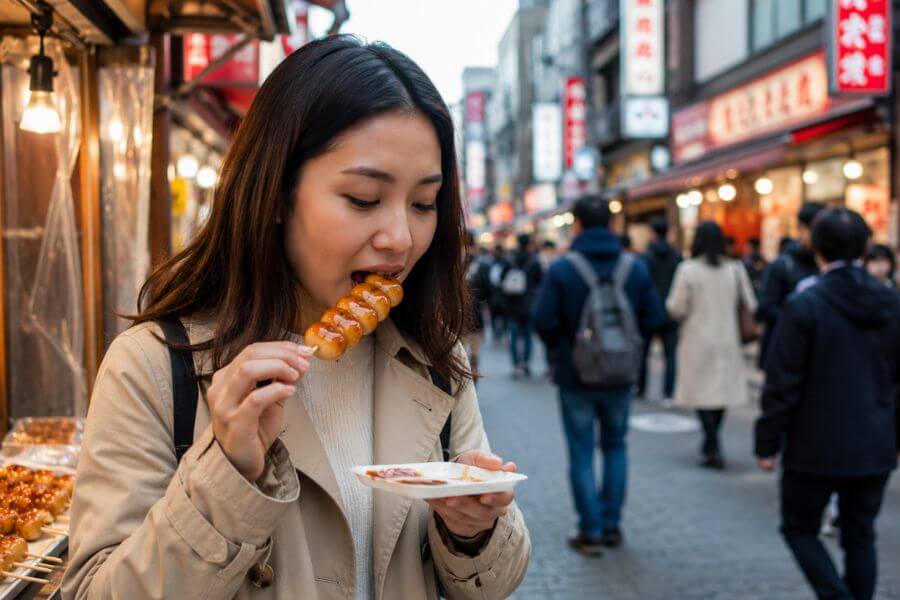
- Dango: These are chewy, round dumplings made from rice flour, usually served on a bamboo skewer. The most popular version is mitarashi dango, which is covered in a sweet, sticky soy sauce glaze that is both salty and sugary.
- Daifuku: This is a soft, stretchy rice cake known as mochi wrapped around a sweet filling, most commonly smooth or chunky sweet red bean paste. A seasonal favorite is ichigo daifuku, which features a whole, juicy strawberry hidden inside the sweet paste.
- Soft Serve Ice Cream: Japan takes soft-serve ice cream very seriously. Beyond vanilla and chocolate, you can find incredible local flavors like earthy green tea, sweet purple yam, black sesame, and even salty sea salt.
Budgeting Strategy and Smart Comparison
To get the most out of your food tour without running out of money, you need to understand how prices compare across different types of shops. Planning your day around where you buy your food will ensure you stay full without overspending.
Snack Price and Convenience Comparison
The table below breaks down the major food sources in Tokyo, showing what you can expect to spend, the best times to visit, and the main benefits of each option.
| Food Source | Average Cost per Item | Best Time to Visit | Main Benefit |
| Convenience Stores (Konbini) | One to three dollars | Early morning or late night | Open twenty-four hours, consistent quality, found on every corner |
| Traditional Street Stalls | Two to five dollars | Afternoon during peak market hours | Freshly cooked, historic recipes, supports local families |
| Department Store Basements | Three to seven dollars | Seven in the evening for big discounts | High-end luxury food, free samples, massive clean variety |
| Local Shopping Streets | One to three dollars | Mid-day on weekends | Lowest prices, authentic local atmosphere, less crowded |
Creating a Balanced Daily Plan
The secret to successful snackpacking is balance. If you spend all your money on fancy crepes in the morning, you will have to skimp on savory bites later. Try to mix a cheap convenience store item with a fresh market snack. For example, grab a quick rice ball for breakfast, spend a bit more on fresh seafood skewers at lunch, and head to a department store basement in the evening to find discounted gourmet items. This keeps your average daily food cost low while maximizing the number of different things you get to taste.
Practical Tips for Your Street Food Adventure
Now that you know what to eat and where to go, let us cover some practical tips to make your adventure as comfortable and fun as possible.
First, keep a small pack of wet wipes or tissues in your bag. Many street food items are sticky, saucy, or juicy. Because public trash cans and restrooms can be hard to find on the street, having your own wipes ensures you can clean your hands quickly before moving on to the next stall.
Second, learn a few basic Japanese phrases. You do not need to be fluent, but showing effort goes a long way. When ordering, you can point to an item and say “Kore o kudasai,” which means “This one, please.” When you receive your food, a polite “Arigatou gozaimasu” (Thank you very much) with a small bow will bring a huge smile to the shopkeeper’s face.
Third, look for lines. If you see a long queue of local Japanese people standing outside a tiny window, join it. Locals know exactly which stalls use the freshest ingredients and the best recipes. A line is the universal sign of incredible food. Use the time in line to watch how other people order and pay so you are ready when you reach the front.
Fourth, dress comfortably. You will be walking thousands of steps every day as you move between neighborhoods and markets. Wear your best walking shoes, bring a small backpack to hold your water bottle and trash, and check the weather before you head out so you are prepared for sudden rain showers.
Frequently Asked Questions
Is it safe to eat street food in Tokyo?
Yes, it is incredibly safe. Japan has some of the strictest food safety and cleanliness laws in the entire world. Street food stalls, convenience stores, and market vendors are held to the exact same high standards as five-star luxury restaurants. The ingredients are fresh, the kitchens are sparkling clean, and the food is often cooked right in front of your eyes over high heat, meaning you can eat with total peace of mind.
How can I find vegetarian or vegan snacks on the street?
Finding vegetarian or vegan food on the streets of Tokyo can be a bit tricky because many savory dishes use a fish broth called dashi for flavoring, even if there is no visible meat or fish. However, you can find great options if you look carefully. For savory snacks, look for plain potato croquettes, grilled corn on the cob brushed with soy sauce, or boiled edamame beans. For sweets, you are in luck, as most traditional treats like rice balls stuffed with pickled plum, sweet potato snacks, and mochi rice cakes are naturally plant-based. Always check the ingredients or ask the vendor if you are unsure.
Do I need to leave a tip at food stalls or restaurants?
No, you should never leave a tip in Japan. Tipping is not part of the culture, and it can actually cause confusion or awkwardness. If you leave extra coins on the counter, the shopkeeper will likely run down the street to return the money you forgot. Good service is considered the standard and is already included in the price of your food. The best way to show your appreciation is to say thank you politely and enjoy every single bite.
What should I do if I cannot read the menus at the stalls?
Do not let language barriers scare you away from amazing food. Almost every food stall in Tokyo has plastic food models, clear pictures, or English labels on their display counters. You can simply point to the picture or model of the food you want and use your fingers to show how many you want to buy. You can also use smartphone translation apps that let you hold your camera over Japanese text to read it in your native language instantly.
Are there places to sit down near the street food markets?
Most street food markets do not have formal seating areas because they want to keep the narrow walkways clear for shoppers. However, you can almost always find a quiet spot to enjoy your snack nearby. Look for small pocket parks, temple courtyards, public benches near train stations, or wide stairs leading up to department stores. Just remember to pack up your trash and take it with you when you leave.