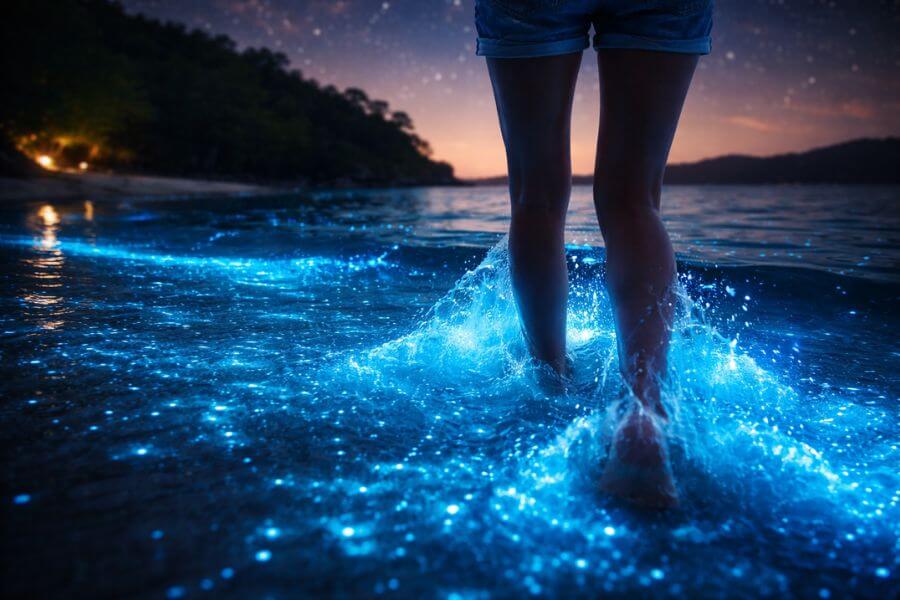
Imagine stepping into the ocean at night and watching the water glow around you. That magical blue sparkle is called bioluminescence, and it happens when tiny marine organisms light up when disturbed. Australia is home to several hidden spots where you can experience this natural wonder for yourself. While bioluminescence is not always guaranteed, visiting the right places at the right time can give you an unforgettable night swimming experience. In this guide, you will discover the top 10 bioluminescent bays in Australia where you can safely explore glowing waters and enjoy a truly unique adventure.
1. Jervis Bay, New South Wales
Jervis Bay is one of the most famous places in Australia for bioluminescence. Known for its white sand beaches and calm waters, this bay often lights up during warm months when plankton levels increase. You can swim or simply walk along the shore and watch the water glow with every movement. Visit on a dark, moonless night for the best experience. Hyams Beach and Huskisson are popular spots within the bay where glowing waves are often reported.
2. Gippsland Lakes, Victoria
The Gippsland Lakes offer one of the most consistent bioluminescent displays in Australia. This large network of inland waterways is known for its bright blue glowing water during certain seasons. You can kayak, swim, or dip your hands into the water to see it sparkle. Lakes Entrance is a great starting point for your visit, and calm nights with little wind will give you the clearest glow.
3. Port Stephens, New South Wales
Port Stephens is another excellent location where you can sometimes witness glowing waters. The area has sheltered bays and clean water, making it ideal for bioluminescent plankton to appear. Fingal Bay and Shoal Bay are good spots to check out. You may not always see it, but when conditions are right, the water lights up beautifully when you swim or splash.
4. Lake Macquarie, New South Wales
Lake Macquarie is one of the largest coastal lakes in Australia and has been known to glow during certain times of the year. The calm water makes it perfect for night swimming when bioluminescence appears. Areas like the Swansea Channel often report sightings. Bring a flashlight for safety, but turn it off when you enter the water to enjoy the natural glow.
5. Pittwater, New South Wales
Pittwater, located just north of Sydney, is a hidden gem for bioluminescence. The sheltered waters and quiet surroundings make it a peaceful place to experience glowing waves. You can swim or paddle at night and watch the water shimmer around you. Try visiting during late summer when plankton blooms are more common.
6. Noosa River, Queensland
The Noosa River sometimes surprises visitors with glowing water, especially during warmer months. While not as predictable as other spots, the calm and shallow areas near the river mouth can produce beautiful light displays. You can swim, paddle, or simply move your hands through the water to see the glow. Noosa is also a great place for a relaxing night by the water.
7. Moreton Bay, Queensland
Moreton Bay near Brisbane offers several quiet areas where bioluminescence can appear. The islands and sheltered bays create ideal conditions for plankton to thrive. Try visiting near North Stradbroke Island or Moreton Island for the best chance of seeing glowing water. Night swimming here can feel magical when the water lights up with every movement.
8. Western Port Bay, Victoria
Western Port Bay is less crowded than other locations, making it a peaceful place to search for bioluminescence. The tidal movements and calm inlets can sometimes create glowing water at night. Hastings and nearby coastal areas are good places to explore. Be mindful of tides and safety when swimming at night.
9. Swan River, Western Australia
The Swan River in Perth has occasional reports of bioluminescence, especially in quiet, sheltered sections. While it is not guaranteed, warm weather and calm water can create the right conditions. You can walk along the riverbank or carefully enter the water to see if it glows. It is a great option if you are exploring Western Australia.
10. Darwin Harbour, Northern Territory
Darwin Harbour offers a tropical setting where bioluminescence can sometimes be seen. The warm climate supports plankton growth, which increases your chances of seeing glowing water. Mindil Beach and nearby areas are popular for evening visits. Swimming may not always be recommended due to marine life, but you can still enjoy the glow from the shore.
Conclusion
Experiencing bioluminescence in Australia is truly something special. While it may require a bit of luck and the right conditions, the reward is worth it. Watching the water glow as you swim or move through it feels like stepping into another world. To improve your chances, visit during warm months, choose dark nights, and look for calm waters. Whether you are in New South Wales, Victoria, Queensland, or beyond, these bioluminescent bays offer unforgettable night swimming experiences you will never forget.
Frequently Asked Questions
What causes bioluminescence in the water?
Bioluminescence is caused by tiny marine organisms called plankton. When they are disturbed by movement, they produce light through a natural chemical reaction. This creates the glowing effect you see when waves crash or when you swim through the water.
When is the best time to see bioluminescence in Australia?
The best time is usually during warmer months when plankton blooms are more common. Late summer and early autumn often provide better chances. Dark nights with little moonlight also make the glow easier to see.
Is it safe to swim in bioluminescent water?
In most cases, it is safe to swim, but you should always check local conditions. Be aware of tides, currents, and marine life. Some areas may have safety concerns, so it is best to research before entering the water.
Can you predict when bioluminescence will happen?
It is difficult to predict exactly when bioluminescence will occur because it depends on environmental factors like water temperature, plankton levels, and weather. However, checking local reports and visiting during peak seasons can improve your chances.
What should you bring for a night swim?
When heading out for a night swim, it is helpful to bring:
- A waterproof flashlight or headlamp
- Swimwear and a towel
- Water shoes for rocky areas
- A friend for safety
Turn off your lights when you enter the water so you can fully enjoy the natural glow around you.