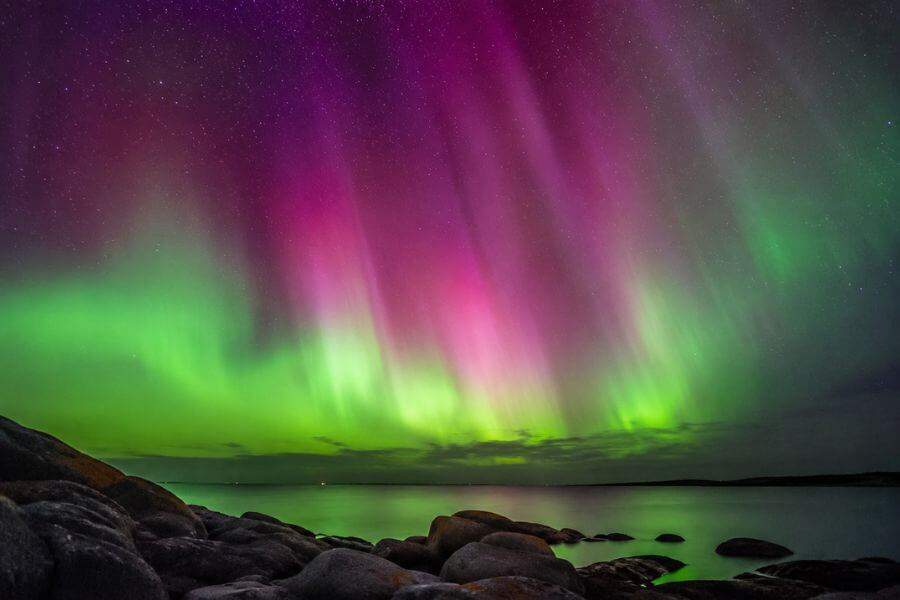
Seeing the Southern Lights, also known as the Aurora Australis, feels almost unreal when it finally appears across the night sky. Soft waves of green, purple, pink, and red light move above the horizon while the rest of the world stays dark and quiet. While many people think you need to travel to places like Antarctica or New Zealand to see this natural wonder, Australia actually has some fantastic viewing spots of its own.
If you want the best chance of catching the aurora in Australia, you need three things: dark skies, southern locations, and good timing. Tasmania is often the top choice, but parts of Victoria, South Australia, and even Western Australia can deliver amazing aurora displays during strong solar activity.
This guide covers the top 10 best places to see the Southern Lights in Australia, including what makes each location special, when to visit, and what you can expect once the sky lights up.
Quick Summary Table 📍
| Rank | Location | State | Best Feature | Best Time to Visit |
|---|---|---|---|---|
| 1 | South Arm Peninsula | Tasmania | Wide open southern ocean views | May to September |
| 2 | Bruny Island | Tasmania | Dark skies and coastal scenery | Winter months |
| 3 | Cradle Mountain | Tasmania | Aurora above mountain landscapes | June to August |
| 4 | Cockle Creek | Tasmania | Australia’s southernmost road access | Autumn and winter |
| 5 | Mount Wellington | Tasmania | Easy access from Hobart | Year round during activity |
| 6 | Wilsons Promontory | Victoria | Mainland Australia’s best aurora spot | Winter and spring |
| 7 | Phillip Island | Victoria | Easy Melbourne getaway | Strong geomagnetic storms |
| 8 | Cape Jervis | South Australia | Clear southern horizons | Cooler months |
| 9 | Eyre Peninsula | South Australia | Remote dark skies | Winter nights |
| 10 | Albany | Western Australia | Rare west coast aurora sightings | During high solar activity |
How We Ranked These Places 🧭
We ranked these Southern Lights destinations using several important factors that can improve your aurora viewing experience:
- Distance from city light pollution
- Clear southern-facing views
- Frequency of aurora sightings
- Accessibility for travellers
- Photography opportunities
- Weather conditions and cloud cover
- Safety and ease of night access
- Overall scenery and atmosphere
- Nearby accommodation options
- Popularity among aurora chasers
1. South Arm Peninsula, Tasmania 🌠
The South Arm Peninsula is widely considered the best place in Australia to see the Southern Lights. Located southeast of Hobart, this area offers uninterrupted views across the Southern Ocean with very little light pollution.
When strong aurora activity happens, the sky here can explode with colour. Green curtains of light often stretch across the horizon, and photographers regularly capture stunning reflections over the water. Because the peninsula is relatively easy to reach from Hobart, it has become a favourite among locals and tourists alike.
The area around Clifton Beach and Goats Bluff is especially popular. You can set up a camera, bring a warm blanket, and wait for the show while listening to waves crash nearby.
Winter usually offers the best conditions because nights are longer and darker. Clear skies are essential, so always check the weather before heading out.
2. Bruny Island, Tasmania 🌊
Bruny Island combines beautiful coastal scenery with some of the darkest skies in Tasmania. That makes it an outstanding place to watch the aurora.
The southern parts of the island are best because they face directly toward Antarctica with almost no artificial light interfering with the view. Cloudy Bay and The Neck are two well-known aurora viewing spots where photographers often gather during strong geomagnetic events.
One of the best things about Bruny Island is the experience itself. Even if the aurora does not appear, you still get dramatic coastlines, rugged beaches, wildlife, and incredible stargazing opportunities.
Because it is an island, weather conditions can change quickly. Dressing warmly is important since temperatures can feel very cold at night, especially near the ocean.
3. Cradle Mountain, Tasmania 🏔️
Cradle Mountain gives you one of the most dramatic Southern Lights backdrops in Australia. Seeing colourful auroras above rugged mountain peaks creates an unforgettable scene.
Unlike coastal aurora locations, Cradle Mountain offers alpine landscapes and still lakes that can reflect the lights beautifully. Dove Lake is particularly famous among photographers for this reason.
The remote location helps keep the skies dark and clear. On calm nights, the stars alone are worth the trip. When aurora activity appears on top of that, the experience becomes extraordinary.
Winter is especially magical because snow sometimes covers the mountains while the aurora dances above them. However, colder temperatures and changing weather can make conditions challenging, so preparation is essential.
4. Cockle Creek, Tasmania 🛶
Cockle Creek sits at the southern end of Tasmania and is the furthest south you can drive in Australia. That alone gives it a huge advantage for aurora viewing.
This remote area feels wild and untouched. With almost no light pollution, the night sky becomes incredibly clear. Aurora chasers often visit this region because it provides some of the strongest viewing opportunities in the country.
The area around Recherche Bay is especially beautiful during aurora displays. Calm water can reflect the colours, while forests and beaches create a peaceful setting.
Because it is remote, you should bring supplies, warm clothing, and fuel before heading there. Mobile reception can also be limited, which adds to the sense of adventure.
5. Mount Wellington, Tasmania ⛰️
Mount Wellington, also known as kunanyi, is one of the easiest aurora viewing spots to access near a major city in Australia.
Just outside Hobart, this mountain gives you elevated views across southern Tasmania and the ocean beyond. During strong aurora events, many locals drive up the mountain late at night to catch the display.
One of the biggest advantages here is convenience. You do not need to travel deep into the wilderness to enjoy the Southern Lights. On clear nights, you can see incredible colours without going far from accommodation, restaurants, or city services.
Conditions at the summit can become freezing and windy very quickly, even outside winter. Warm clothing is absolutely necessary.
6. Wilsons Promontory, Victoria 🌿
Wilsons Promontory is often called the best mainland location in Australia for seeing the Southern Lights.
Located at the southern tip of Victoria, this national park offers dark skies, open beaches, and sweeping ocean views. Places like Tidal River and Whisky Bay are known for occasional aurora sightings during periods of strong solar activity.
While auroras here are generally weaker than in Tasmania, the experience can still be spectacular when conditions line up properly. Photographers often capture soft green and pink colours near the horizon.
The national park itself is worth visiting regardless of aurora activity. Hiking trails, native wildlife, and coastal scenery make it one of Australia’s most beautiful outdoor destinations.
7. Phillip Island, Victoria 🐧
Phillip Island is a great option if you want an easier aurora trip from Melbourne. Although city lights can sometimes affect visibility, strong geomagnetic storms have produced impressive aurora sightings here.
Cape Woolamai and Pyramid Rock are two of the best viewing spots because they offer darker skies and open southern views.
One reason people love Phillip Island is accessibility. You can enjoy beaches, wildlife attractions, and restaurants during the day before heading out for night sky watching later on.
Because the aurora is less predictable in mainland Australia, flexibility is important. Watching solar activity forecasts can help improve your chances.
8. Cape Jervis, South Australia 🚢
Cape Jervis sits on the Fleurieu Peninsula and offers excellent southern-facing ocean views that can occasionally reveal the aurora during strong solar storms.
The area is quieter and darker than many coastal locations near Adelaide, making it a better choice for serious sky watchers. On the right night, faint green or pink glows can appear low on the horizon.
Cape Jervis also works well for astrophotography thanks to its open skies and rugged coastline. Many visitors combine aurora chasing with camping or weekend coastal trips.
While sightings are less common than in Tasmania, the possibility alone attracts many photographers and night sky enthusiasts.
9. Eyre Peninsula, South Australia 🌅
The Eyre Peninsula is famous for dramatic coastlines, seafood, and wide open skies. Its remote location also makes it a strong contender for aurora viewing in South Australia.
Areas near Lincoln National Park and the southern coastline provide excellent darkness levels with minimal interference from urban lighting. During strong solar activity, photographers have captured colourful aurora displays stretching above the ocean.
One major advantage here is space. You can often find quiet beaches and isolated viewpoints without crowds.
Winter nights are typically best because cooler air can improve visibility and darkness lasts longer.
10. Albany, Western Australia 🌠
Albany may surprise many people, but this southern coastal city has occasionally delivered beautiful aurora sightings during periods of intense solar activity.
Located on the southern edge of Western Australia, Albany faces directly toward Antarctica across the Southern Ocean. Beaches and coastal lookouts outside town provide the best chances of seeing faint aurora colours.
While aurora sightings are rarer here than in Tasmania or Victoria, strong geomagnetic storms can produce memorable displays. Photographers often head to places like Torndirrup National Park for darker skies and scenic foregrounds.
Albany also offers dramatic coastal cliffs and powerful ocean scenery that make nighttime photography even more rewarding.
Conclusion ✨
Australia may not be the first place people think of for aurora chasing, but it offers some truly incredible opportunities to see the Southern Lights. Tasmania remains the clear standout thanks to its southern location, dark skies, and regular aurora activity. However, parts of Victoria, South Australia, and Western Australia can also deliver unforgettable displays during strong solar events.
If you want the best chance of success, plan your trip during winter, stay away from city lights, monitor aurora forecasts, and be patient. The Southern Lights are unpredictable, but that unpredictability is part of what makes finally seeing them so special.
Whether you are a photographer, traveller, or someone who simply loves nature, witnessing the Aurora Australis in Australia is an experience you will remember for years.
Frequently Asked Questions ❓
What causes the Southern Lights?
The Southern Lights happen when charged particles from the sun interact with Earth’s magnetic field and atmosphere. This creates glowing colours in the sky, usually green, pink, purple, or red.
Can you see the Southern Lights with the naked eye?
Yes, but the colours may appear softer than they do in photographs. Cameras often capture more vivid detail because they use long exposure settings.
What time are the Southern Lights most visible?
The best viewing time is usually between 10 pm and 2 am when the sky is darkest.
Do you need special camera equipment to photograph the aurora?
A camera with manual settings and a tripod will give you the best results. Smartphones can sometimes capture auroras too, especially newer models with night photography features.
Is winter the only season to see the Southern Lights?
No, auroras can appear at any time of year. However, winter is generally better because nights are longer and darker, which improves visibility.