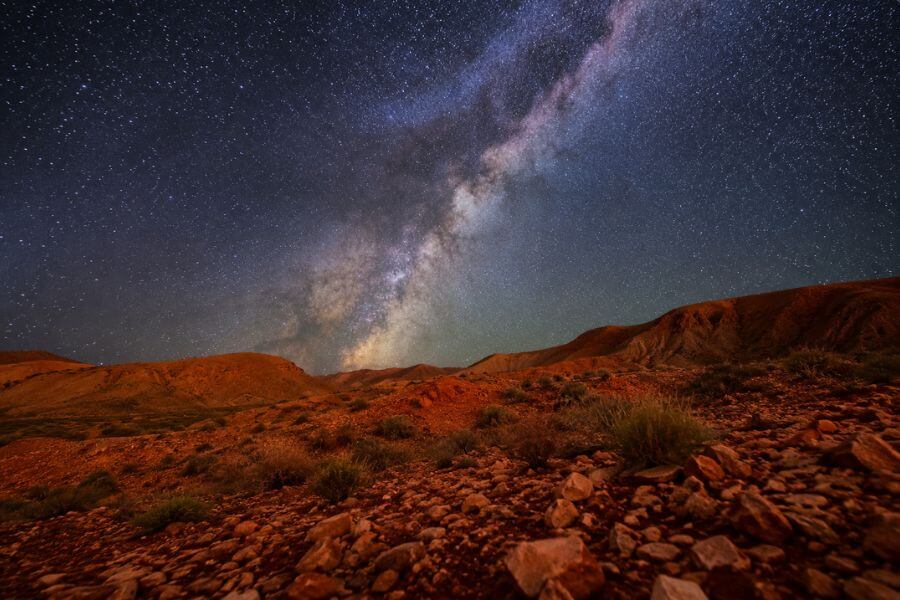
If you have ever stood under a sky packed with stars so bright they almost look painted on, you already know how magical the Australian Outback can be. Away from busy cities and bright streetlights, the Outback offers some of the clearest night skies in the world. You can spot the Milky Way stretching across the sky, watch shooting stars flash overhead, and even see distant galaxies with the naked eye.
Whether you are planning a road trip, a camping adventure, or a quiet getaway, finding the right stargazing spot can completely change your experience. Some places offer desert landscapes that glow under moonlight, while others combine famous landmarks with dark skies that seem endless.
In this guide, you will discover the top 10 best spots to stargaze in the Australian Outback, along with what makes each location special and why they deserve a place on your travel bucket list.
Quick Summary Table ✨
| Rank | Stargazing Spot | State/Territory | Best Feature | Ideal For |
|---|---|---|---|---|
| 1 | Uluru | Northern Territory | Stunning desert skies over iconic rock formations | Mountains under star-filled skies |
| 2 | Alice Springs | Northern Territory | Clear skies almost year round | Astronomy lovers |
| 3 | Warrumbungle National Park | New South Wales | Australia’s first Dark Sky Park | Serious stargazers |
| 4 | Coober Pedy | South Australia | Remote desert darkness | Unique Outback experiences |
| 5 | Lake Eyre | South Australia | Massive open horizons | Photography |
| 6 | Karijini National Park | Western Australia | Stars above dramatic gorges | Campers and hikers |
| 7 | Broken Hill | New South Wales | Historic Outback town with dark skies | Easy Outback access |
| 8 | The Kimberley | Western Australia | Remote wilderness skies | Adventure travellers |
| 9 | Flinders Ranges | South Australia | Mountains under star filled skies | Nature lovers |
| 10 | Tennant Creek | Northern Territory | Quiet desert skies with little light pollution | Peaceful stargazing trips |
How We Ranked These Stargazing Spots 🔭
To create this list, we focused on the things that matter most for a memorable stargazing experience in the Australian Outback:
- Low light pollution for clearer night skies
- Weather conditions and number of clear nights each year
- Scenic landscapes that look beautiful under the stars
- Accessibility for travellers and campers
- Overall uniqueness of the experience
- Opportunities for astrophotography
- Nearby accommodation or camping options
- Reputation among travellers and astronomy enthusiasts
1. Uluru, Northern Territory 🏜️
Few places on Earth make stargazing feel as powerful as Uluru. During the day, the giant sandstone monolith dominates the desert landscape. At night, the sky takes over and creates one of the most unforgettable sights in Australia.
Because the area is so remote, there is almost no artificial light nearby. This allows thousands of stars to appear with incredible clarity. On a clear night, you can easily see the Milky Way arching across the sky like a glowing river.
Many visitors choose guided night tours where local experts explain constellations and Indigenous star stories. These tours add a deeper cultural connection to the experience and help you understand how the night sky has guided people in the desert for generations.
The cooler months from May to September are especially comfortable for evening viewing. Bringing a blanket or camping chair can make your night even more relaxing.
2. Alice Springs, Northern Territory 🌠
Alice Springs is one of the best places in Australia for astronomy. The dry climate means there are many cloud-free nights throughout the year, making it ideal for consistent stargazing.
The town itself already offers impressive views, but the real magic begins when you drive a short distance outside the main area. The surrounding desert becomes incredibly dark, revealing stars in amazing detail.
One of the biggest highlights here is the Earth Sanctuary Astronomy Tour. These experiences often include powerful telescopes that let you see planets, nebulae, and star clusters that are normally impossible to spot with the naked eye.
Alice Springs also works well as a base for longer Outback adventures, so you can combine stargazing with hiking, camping, and cultural experiences.
3. Warrumbungle National Park, New South Wales 🌙
Warrumbungle National Park is officially recognised as Australia’s first Dark Sky Park, and it absolutely deserves the title. Located far from major cities, this area has some of the darkest skies in the country.
The national park is famous for its volcanic rock formations, which look incredible beneath a sky filled with stars. You can often see satellites moving overhead, bright planets, and even meteor showers during peak seasons.
The nearby Siding Spring Observatory adds another layer to the experience. Astronomy lovers can visit the observatory and learn more about deep space research happening right in the Australian bush.
Camping here is especially popular because you can simply step outside your tent and look straight into a sky glowing with stars.
4. Coober Pedy, South Australia 🚐
Coober Pedy already feels like another planet during the day, so it is no surprise that the night sky here feels equally surreal. Famous for its underground homes and opal mining history, this remote desert town is also one of the best places for stargazing.
The dry desert air helps create very clear conditions, and the lack of nearby cities means minimal light pollution. On moonless nights, the stars appear incredibly sharp and bright.
Many travellers stay at underground accommodation before heading outside for nighttime sky watching. The peaceful silence of the desert adds to the atmosphere and makes the experience feel deeply calming.
If you enjoy photography, Coober Pedy is also fantastic for capturing dramatic shots of the Milky Way above the rugged desert landscape.
5. Lake Eyre, South Australia 📸
Lake Eyre delivers one of the most unique stargazing settings in the country. When dry, the massive salt lake creates wide open reflective landscapes that seem endless beneath the stars.
The lack of trees, buildings, and bright lights gives you an uninterrupted view of the sky in every direction. Under certain conditions, reflections on the salt surface can make the stars look even more dramatic.
Because the area is extremely remote, planning ahead is important. Many visitors explore the region through guided tours or camping trips.
This spot is especially loved by astrophotographers who want huge panoramic sky shots without distractions in the foreground.
6. Karijini National Park, Western Australia 🧭
Karijini National Park combines rugged natural beauty with brilliant night skies. During the day, travellers explore deep gorges, waterfalls, and red rock landscapes. At night, the park transforms into a stargazing paradise.
The isolation of the Pilbara region creates dark skies with excellent visibility. You can often see dense clusters of stars stretching from one horizon to the other.
Camping in Karijini adds a special feeling because the silence of the Outback becomes part of the experience. Sitting beside a campfire while looking at the Milky Way overhead is something many visitors remember for years.
Winter is usually the best time to visit because temperatures are cooler and conditions are more comfortable.
7. Broken Hill, New South Wales 🌟
Broken Hill is one of the easiest Outback destinations to reach while still offering fantastic stargazing opportunities. The historic mining town has a rich arts scene, dramatic desert scenery, and excellent dark skies just outside town.
The surrounding plains provide broad open views that make it easy to watch constellations rise and move across the sky throughout the evening.
Broken Hill also works well for travellers who want a balance between comfort and adventure. You can enjoy restaurants and accommodation during the day before heading out for a quiet night under the stars.
The sunsets here are beautiful too, making the transition from daylight to stargazing especially memorable.
8. The Kimberley, Western Australia 🛶
The Kimberley region is one of the wildest and most remote parts of Australia. Its untouched landscapes and low population make it a dream destination for stargazers.
Whether you are camping near gorges, waterfalls, or remote stations, the night sky often becomes the highlight of the trip. The stars feel brighter here because there is almost no surrounding light for hundreds of kilometres.
Many travellers combine stargazing with long road trips through the region. Watching the Milky Way above ancient landscapes creates an experience that feels both peaceful and adventurous at the same time.
Because the Kimberley covers such a huge area, you can find many isolated locations that offer completely different night sky views.
9. Flinders Ranges, South Australia ⛰️
The Flinders Ranges offer a mix of mountain scenery, rugged bushland, and clear desert skies. The area is known for its dramatic landscapes, which look even more impressive under moonlight and stars.
Many eco lodges and stations in the region specifically promote stargazing experiences because the skies are so reliable and clear.
The cooler evenings make it comfortable to spend hours outdoors, especially during autumn and winter. Travellers often set up camp chairs and simply relax while watching the sky slowly shift through the night.
The combination of ancient landscapes and brilliant stars gives the Flinders Ranges a timeless atmosphere that feels uniquely Australian.
10. Tennant Creek, Northern Territory 🔥
Tennant Creek may not be as famous as some other Outback destinations, but it remains one of the most underrated places for stargazing in Australia.
Located between Alice Springs and Darwin, this quiet desert town offers dark skies and very little light pollution. It is an excellent stop for travellers exploring the Northern Territory by road.
Nearby open areas provide peaceful spots where you can fully enjoy the silence of the Outback while staring into a sky crowded with stars.
Because fewer tourists visit Tennant Creek compared to other locations, the experience often feels more personal and untouched.
Conclusion 🌍
The Australian Outback is one of the best places in the world to experience truly dark skies. Whether you choose the iconic beauty of Uluru, the scientific reputation of Alice Springs, or the remote wilderness of the Kimberley, every destination on this list offers something unforgettable.
Stargazing in the Outback is about more than just looking at stars. It is about slowing down, escaping city life, and experiencing nature on a much bigger scale. The silence, the endless horizons, and the glowing night sky create moments that stay with you long after the trip ends.
If you are planning an Australian adventure, adding at least one of these stargazing destinations to your itinerary is absolutely worth it.
Frequently Asked Questions ❓
What is the best time of year for stargazing in the Australian Outback?
The cooler months between May and September are generally the best. The weather is more comfortable, the skies are often clearer, and you can spend longer outdoors at night without extreme heat.
Do I need a telescope for Outback stargazing?
No, you can see an incredible amount with just your eyes. A telescope or binoculars can enhance the experience, but the dark skies alone are already impressive.
Can you see the Milky Way clearly in the Outback?
Yes, the Milky Way is often highly visible in the Australian Outback because of the low light pollution and dry conditions.
Is camping the best way to enjoy stargazing?
Camping gives you the longest and most immersive experience, but many travellers also enjoy guided tours, eco lodges, and caravan stays.
Are Outback stargazing locations suitable for families?
Yes, many spots are family-friendly, especially locations with guided tours and established campgrounds. Just make sure you prepare properly for remote travel conditions.